
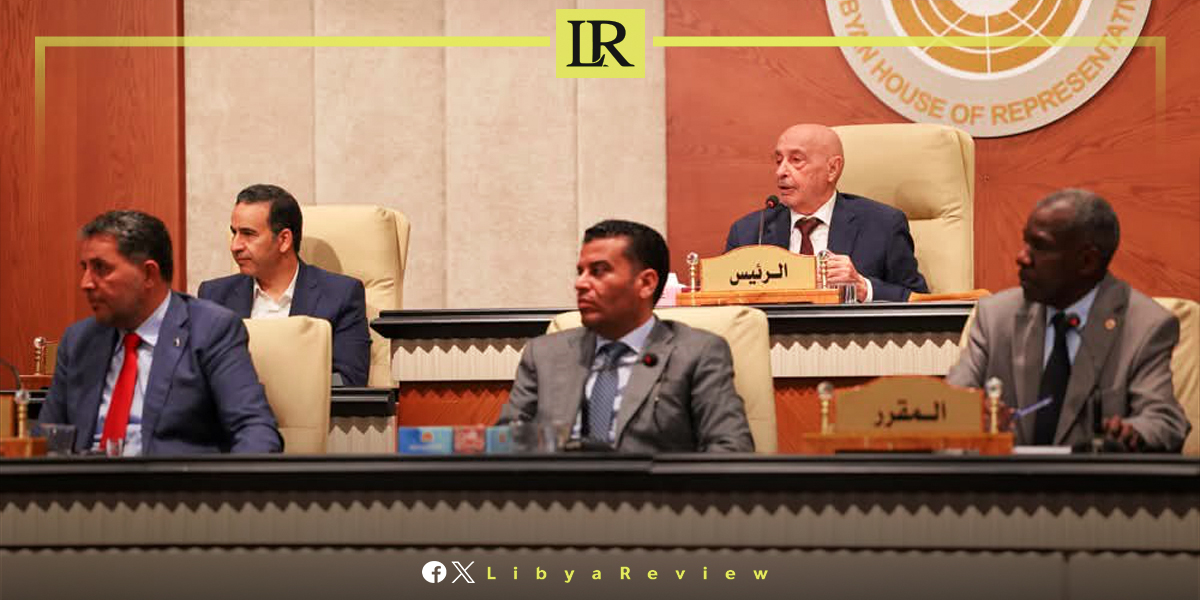
The Libyan Parliament, led by Speaker Ageela Saleh, convened a formal session on Tuesday in Tobruk to hear policy proposals presented by several candidates vying to lead a new unified government.
The session was attended by First Deputy Speaker Fawzi Al-Nuwairi and comes amid renewed efforts to consolidate executive authority and pave the way for long-delayed national elections.
In his remarks at the end of the session, Speaker Saleh reaffirmed that the political solution to Libya’s prolonged crisis lies in holding national elections. He emphasized the importance of establishing a unified executive government that can effectively implement this electoral process and restore stability nationwide.
Saleh pointed out that the international community, especially the United Nations Security Council, has been calling for a unified executive authority in Libya.
In response, the House of Representatives passed essential legislation, including the electoral laws for the presidency and the national assembly, as well as the 13th constitutional amendment, laying the legal groundwork for holding elections.
He also referenced recommendations from the UN Support Mission’s advisory committee, which called for the establishment of a new, unified government to implement the outcomes of the 6+6 Joint Committee, an initiative designed to resolve disputes between the House of Representatives and the High Council of State over the electoral process.
Saleh confirmed that many candidates had submitted applications for the position of prime minister. Their nominations were accepted based on a joint mechanism agreed upon by both legislative chambers. Each candidate reportedly secured endorsements from more than 100 members of both the House and the High Council of State, a sign of growing political consensus to replace the current interim government led by Abdul Hamid Dbaiba.
Libya’s parliament is expected to continue discussions in the coming days to decide on the next prime minister, aiming to establish a leadership capable of uniting institutions and organizing elections in 2025.

