
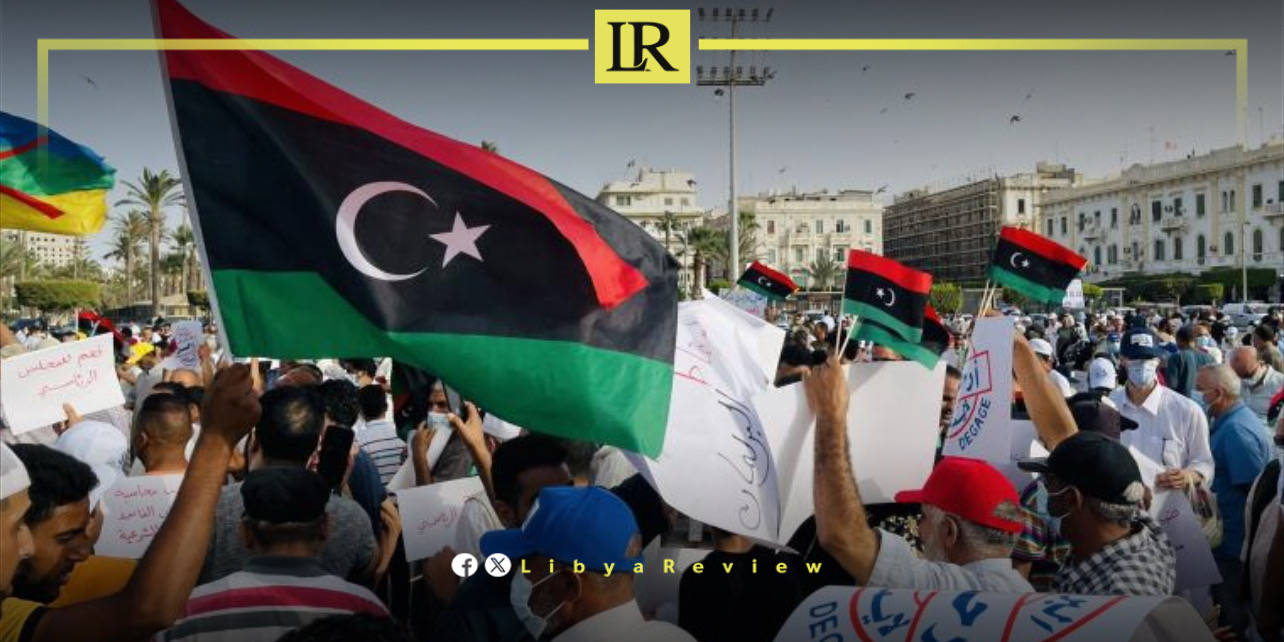
For the sixth consecutive week, massive protests erupted in Tripoli’s Martyrs’ Square on Friday, with thousands of Libyans demanding the resignation of Prime Minister Abdul Hamid Dbaiba and his Government of National Unity.
Frustrated by worsening living conditions, economic mismanagement, and growing insecurity, demonstrators continue to voice their anger in one of the capital’s most visible public displays in recent years.
Protesters carried banners accusing the government of corruption and failing to provide basic services. Many called for the disbanding of armed groups operating outside state control and urged their integration into a unified national army. They argue that the unchecked proliferation of weapons, particularly in western Libya, continues to undermine stability and fuel lawlessness.
Adding momentum to the gathering, fans of Al-Ahli Tripoli Sports Club joined the demonstration after greeting their handball team at Mitiga International Airport following its victory in the Libyan Cup. Their chants, including “The people want the government to fall,” echoed the core demands of the protest movement.
The wave of unrest began in mid-May following violent clashes in Tripoli after the killing of Abdulghani al-Kikli, the former head of the Stability Support Apparatus.
The incident sparked days of deadly confrontations, with significant casualties and damage to both public and private property. The unrest exposed deep fractures within the security apparatus and intensified calls for genuine reform.
Demonstrators remain united in their demand for a new government capable of restoring security, organizing long-delayed elections, and addressing mounting economic hardships. Despite public pressure, the Dbaiba administration has yet to offer a meaningful response.
Analysts warn that the sustained protests could mark a pivotal moment in Libya’s post-2011 transition. The scale and persistence of public mobilization are being seen as a serious challenge to the government’s legitimacy. With no clear resolution in sight, the pressure on political leaders, both in Tripoli and in the east, is expected to grow.

