
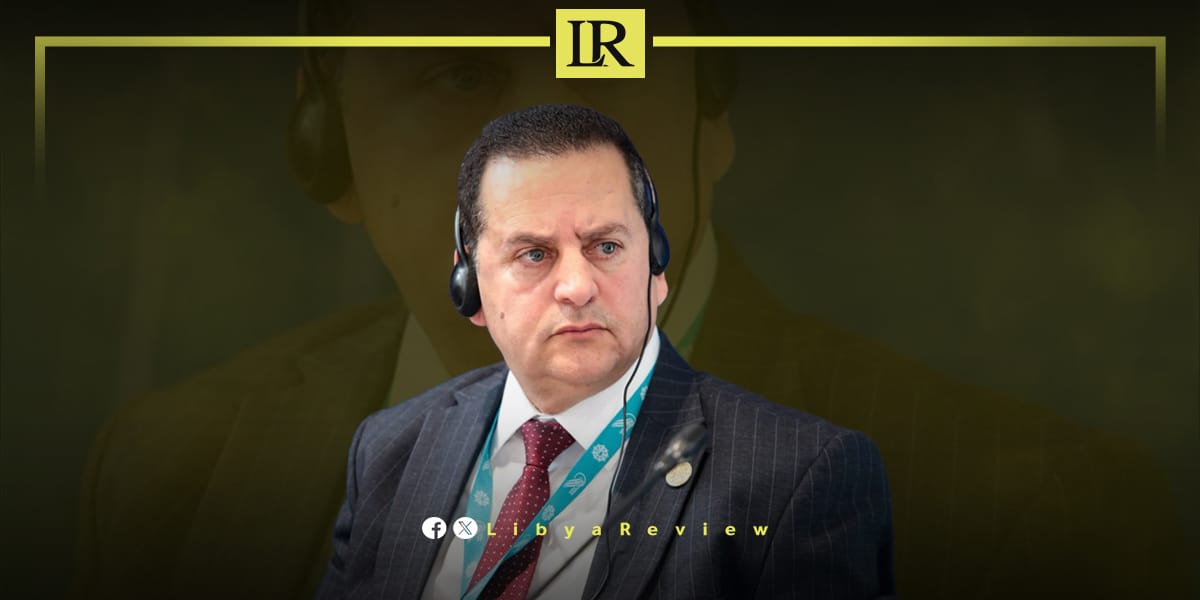
Libya’s Foreign Minister in the Parliament-designate government, Abdel-Hadi Al-Hwaij, reiterated that Libya “will not become Europe’s policeman in the Mediterranean,” stressing a firm rejection of any plans aimed at resettling migrants inside Libyan territory. He warned that such proposals pose a direct threat to national security and undermine Libya’s sovereign decision-making.
Al-Hwaij delivered his remarks during a roundtable titled “Migration and Security in a Divided World: Enhancing International and Regional Cooperation,” held as part of the MEDays International Forum hosted in Tangier, Morocco, between 25 and 29 November. The minister’s comments reflected an increasingly assertive Libyan position on managing irregular migration flows and safeguarding stability along the Mediterranean corridor.
He noted that Libya occupies a pivotal geographical location, serving as a major transit point for migrants attempting to reach Europe. This, he said, places significant responsibilities on the country, particularly regarding the protection of Mediterranean maritime security and the broader Sahel and North African region.
Al-Hwaij highlighted Libya’s ongoing efforts to secure its borders and dismantle smuggling and human-trafficking networks. These actions, he explained, have contributed to reducing irregular migration routes and enhancing stability. He emphasised that effective border management must be complemented by structured cooperation among countries of origin, transit and destination.
The foreign minister also urged the adoption of more pragmatic approaches that balance security, humanitarian considerations and development needs. He argued that long-term solutions require investment in economic growth and stability in migrant-producing regions, alongside coordinated regional strategies.
During the session, Al-Hwaij presented an overview of the “Benghazi Declaration” on migration, describing it as a comprehensive Libyan framework designed to address the root causes of irregular migration, strengthen collective action and establish practical mechanisms for cooperation at both regional and international levels.
He concluded by calling on international partners to respect Libya’s sovereignty, support its national efforts and refrain from imposing external agendas that could destabilise the country or compromise its security priorities.

