
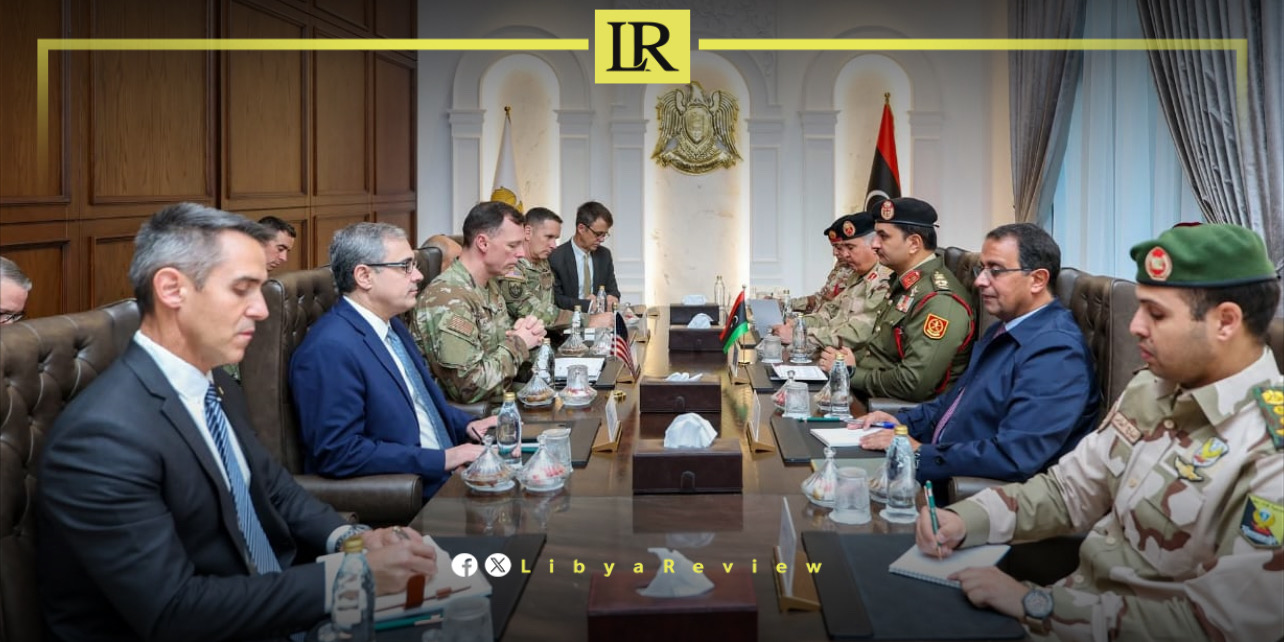
Libya’s National Army (LNA) is intensifying its effort to persuade the United States to support lifting the international arms embargo, arguing that the country’s rapidly escalating security threats demand modern, sophisticated military capabilities.
The issue was a central topic during recent meetings in Benghazi between Lieutenant General Saddam Khalifa Haftar, Deputy Commander-in-Chief of the Libyan National Army (LNA), and General Dagvin Anderson, Commander of US Africa Command (AFRICOM).
Discussions explored whether Washington might endorse easing restrictions to allow Libya’s army to upgrade its defensive capacity, confront terrorist networks, and secure its extensive borders.
Political analyst Kamel Al-Marash said the request reflects urgent operational needs rather than political maneuvering.
Libya’s geography, he noted, makes border management nearly impossible without advanced surveillance systems and modern weaponry. With more than 5,000 kilometers of borders stretching deep into the Sahel—one of the world’s most unstable regions—Libya faces continuous pressure from extremist groups, traffickers, and smuggling networks.
Many of these routes feed directly into migration channels heading toward Europe and, indirectly, the United States, making Libyan border security a matter of international concern.
According to Al-Marash, the LNA has consistently pressed for the embargo to be lifted, stressing that its outdated equipment limits its ability to respond to evolving threats.
The army seeks to modernize by acquiring drones, radar systems, and technologies central to seventh-generation warfare. He added that US military officials appear increasingly receptive, expressing confidence in the LNA’s command structure and its capacity to secure critical territory.
However, any change to the embargo requires political approval from Washington.
Al-Marash emphasized that progress will depend on how the US evaluates regional power dynamics and Libya’s ability to unify its military structure under a single professional leadership—an area where he believes the LNA already demonstrates clear institutional advantage compared to the fragmented armed groups operating in western Libya.
Al-Marash concluded that lifting the embargo could significantly strengthen Libya’s counterterrorism capabilities and border control. But whether this shift will occur depends on US strategic calculations and Libya’s progress toward military consolidation.

