
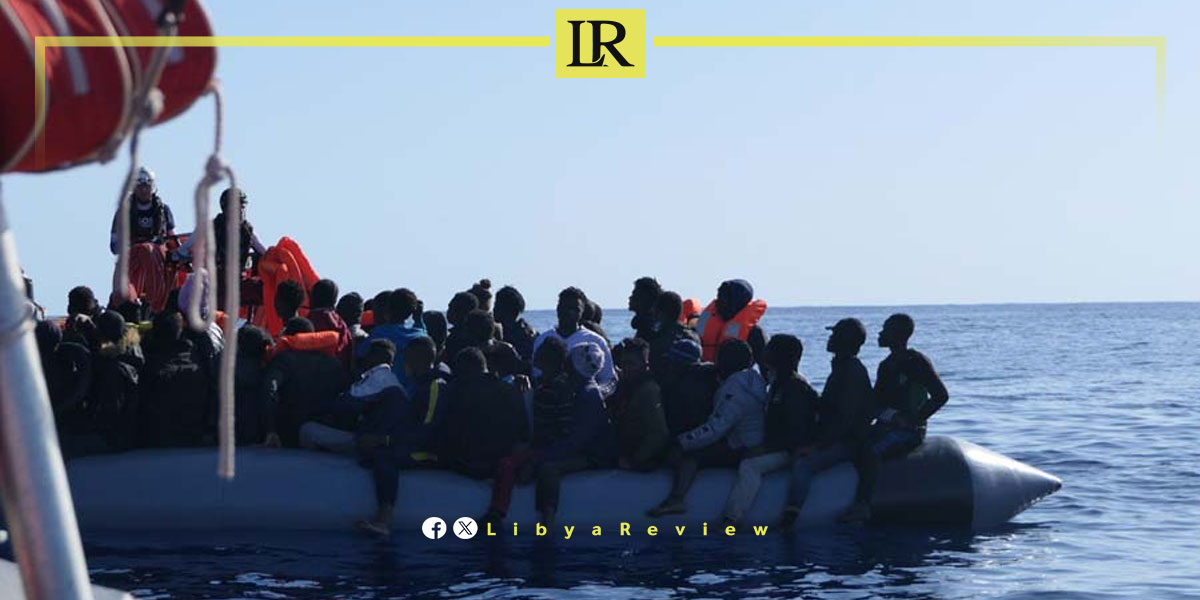
The European Border and Coast Guard Agency, Frontex, has warned that Libya continues to be the most significant departure point for migrants attempting to reach Europe, despite ongoing international efforts to reduce irregular crossings in the Central Mediterranean.
In a detailed assessment, the agency said that entrenched smuggling networks, political fragmentation, and the presence of numerous armed groups make meaningful improvements unlikely in the near term.
Frontex reported that Libya remains a key operational hub for migrant transit, with Benina Airport in Benghazi serving as a primary arrival point for travelers from Bangladesh, Syria, and Pakistan. From there, many are moved across Libya by organized smuggling groups.
The agency noted that existing cooperation agreements between the EU, Italy, and Libya—as well as similar arrangements with Tunisia—have had limited effect in curbing departures, largely due to weak enforcement and the complex security landscape.
The agency also expressed concern over the expanding Russian military presence in eastern Libya, warning that migration flows could be exploited as a tool of hybrid pressure against Europe. Frontex said new migration corridors may emerge as smugglers adapt to enforcement measures, with potential alternative routes forming through West Africa, Turkey, or the Balkans.
The warning comes as members of the Global Coalition to Fight Migrant Smuggling launched a joint declaration in Brussels aimed at unifying international efforts to dismantle smuggling networks.
The declaration, signed by more than 50 countries and international partners, focuses on prevention, operational disruption, and expanding safe and legal alternatives to irregular migration. The initiative emphasizes tightening national legislation, improving information sharing, and cutting off financial resources linked to smuggling operations, including those facilitated online.
Libya, however, did not sign the declaration. Coalition members stressed that the document remains open to all governments and organizations willing to join coordinated global efforts to combat migrant smuggling and reduce reliance on dangerous routes through North Africa.
They also called for expanding legal pathways for migration—such as employment programs, educational opportunities, and protection mechanisms—to reduce the incentive for migrants to resort to irregular crossings.The European Border and Coast Guard Agency, Frontex, has warned that Libya continues to be the most significant departure point for migrants attempting to reach Europe, despite ongoing international efforts to reduce irregular crossings in the Central Mediterranean. In a detailed assessment, the agency said that entrenched smuggling networks, political fragmentation, and the presence of numerous armed groups make meaningful improvements unlikely in the near term.
Frontex reported that eastern Libya remains a key operational hub for migrant transit, with Benina Airport in Benghazi serving as a primary arrival point for travelers from Bangladesh, Syria, and Pakistan. From there, many are moved across Libya by organized smuggling groups. The agency noted that existing cooperation agreements between the EU, Italy, and Libya—as well as similar arrangements with Tunisia—have had limited effect in curbing departures, largely due to weak enforcement and the complex security landscape.
The agency also expressed concern over the expanding Russian military presence in eastern Libya, warning that migration flows could be exploited as a tool of hybrid pressure against Europe. Frontex said new migration corridors may emerge as smugglers adapt to enforcement measures, with potential alternative routes forming through West Africa, Turkey, or the Balkans.

