
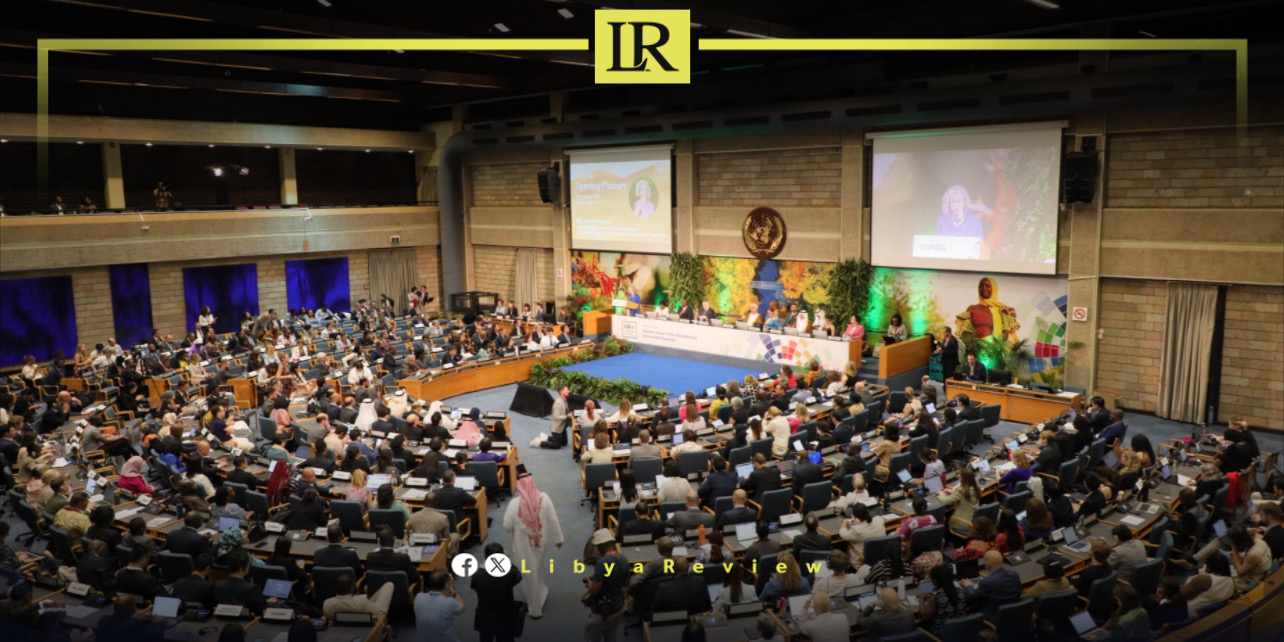
Libya has won the position of Vice President of the United Nations Environment Assembly (UNEA) during its eighth session, marking a significant diplomatic achievement and one of the highest international roles the country has secured in the environmental sector.
The post places Libya among the senior leadership of the world’s foremost environmental decision-making body, which includes environment ministers from across the globe.
The election took place during the closing session of the assembly held on Friday, December 12, 2025, in Nairobi, Kenya. Libya was represented by the Minister of Environment in the Government of National Unity and Chair of the African Ministerial Conference on the Environment, Ibrahim Munir, who was elected Vice President of UNEA’s eighth session.
The assembly witnessed broad international participation, with more than 90 environment ministers and approximately 60 deputy ministers attending the sessions. According to Libya’s Ministry of Foreign Affairs, Libya secured the post with minimal opposition, despite Ethiopia formally contesting the position and conducting extensive diplomatic outreach. The ministry said the result reflects growing international confidence in Libya’s engagement and its ability to contribute constructively to global environmental efforts.
During the assembly, Libya reaffirmed its commitment to the principles and objectives of the United Nations Environment Assembly and pledged to play an active role in advancing international environmental action. Libyan representatives emphasized the country’s dedication to implementing major environmental agreements, including the UN Framework Convention on Climate Change, the Convention on Biological Diversity, and international conventions addressing desertification.
Libya also highlighted its ongoing efforts to develop and implement national strategies aimed at strengthening the sustainable management of natural resources and reducing pollution. Particular focus was placed on coastal regions, which face increasing environmental pressure due to climate change impacts, rising sea levels, and pollution.
In its closing statement, Libya stressed the importance of strengthening international cooperation, especially in support of African environmental priorities. It called for improved access to flexible and affordable financing mechanisms to help countries most vulnerable to environmental risks implement effective adaptation and resilience programs.

