
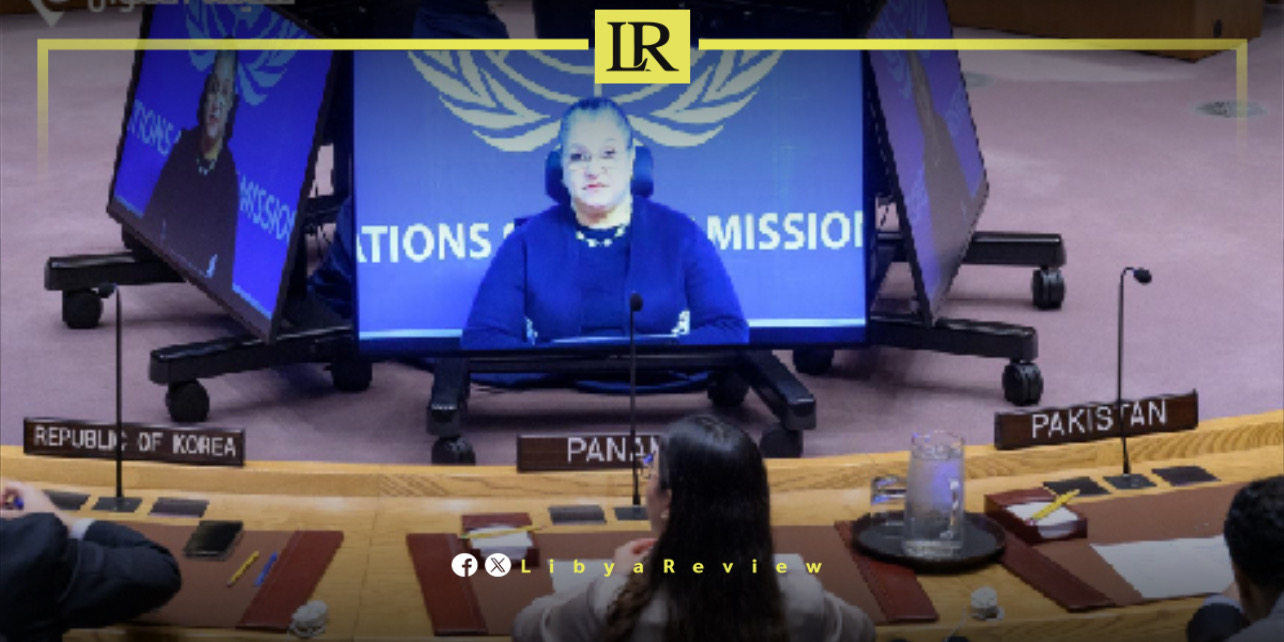
The Special Representative of the UN Secretary-General for Libya, Hanna Serwaa Tetteh, has stressed that completing Libya’s electoral framework remains a fundamental requirement for overcoming the country’s prolonged political stalemate.
In a briefing to the UN Security Council, Tetteh highlighted the urgent need to move beyond institutional paralysis and finalize the core political tracks leading to nationwide elections. She said the implementation of Libya’s political roadmap still depends on completing the formation of the board of the High National Elections Commission and reaching consensus on the constitutional and legal framework governing the electoral process.
Tetteh explained that such steps are essential to allow the electoral commission to proceed with preparations for both presidential and parliamentary elections, which have repeatedly been delayed amid legal disputes and political divisions.
She also referred to the launch of a structured dialogue held on December 14 and 15, involving 124 Libyan participants representing state institutions, civil society, political parties, academic circles, and cultural and linguistic components. Tetteh described the initiative as the first dialogue of its scale to be held inside Libya, noting that it aims to develop principles and recommendations in governance, economic reform, security, and national reconciliation, all of which are necessary to create conditions for a peaceful and credible electoral process.
On the economic front, Tetteh underscored the importance of strengthening financial stability, pointing to ongoing efforts to coordinate development spending and work toward a unified national budget. She also welcomed the conduct of municipal council elections in several Libyan municipalities, describing them as a positive step toward reinforcing local governance and advancing democratic practices.
Addressing security issues, Tetteh highlighted continued efforts to support stability and improve coordination in border management. She reaffirmed the readiness of the United Nations Support Mission in Libya to continue assisting Libyan institutions across political, economic, and security tracks, with the aim of restoring institutional unity and preparing the country for long-awaited national elections.

