
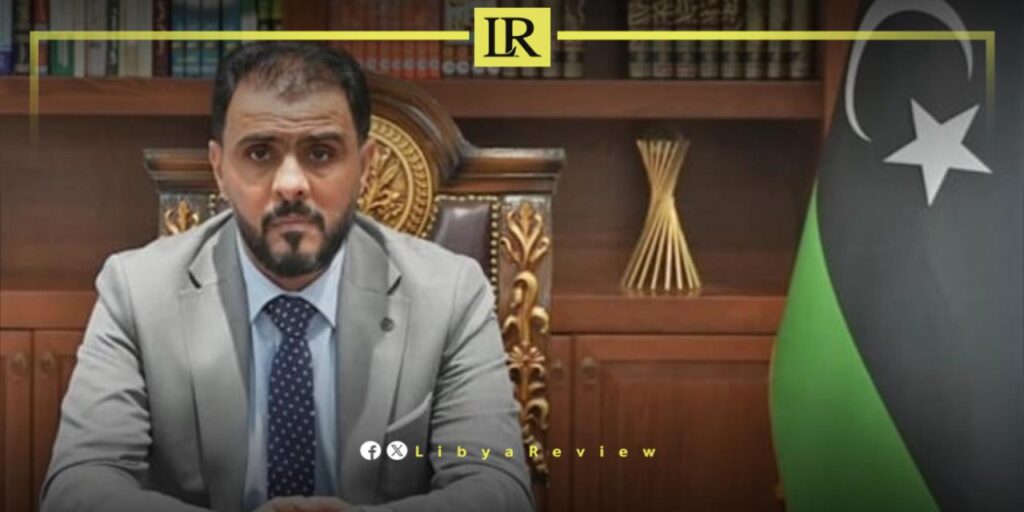
Libya’s parliament-designate Prime Minister, Osama Hammad, has issued a decision declaring an official public holiday to mark the country’s Independence Day, according to a statement released by the government.
Under Decision No. (275) of 2025, Wednesday will be observed as an official holiday across all ministries, public authorities and state institutions in celebration of Libya’s Independence Day.
The decision also designates Thursday as a work leave to be deducted from employees’ annual leave balance, in line with existing labour regulations.
The government clarified that the holiday will not apply to health facilities or security bodies whose work nature requires continuous operation.
Employees in these sectors will retain their legal right to compensation for working during official holidays, in accordance with Law No. 12 of 2010 regulating labour relations and its executive regulations.
In a related provision, the decision also stipulates that Thursday, 25 December, will be treated as a leave day across all government bodies, to be deducted from annual leave balances, also in line with Law No. 12 of 2010.
Libya commemorates Independence Day on 24 December, marking the historic moment when the country achieved sovereignty after decades of foreign rule. Independence was the culmination of a long national struggle that began with Italian occupation in 1911 and continued through years of resistance and international diplomacy.
Libya’s path to independence was formally recognised through a United Nations resolution issued in November 1949, which paved the way for the establishment of an independent Libyan state. On 24 December 1951, the late King Idris Al-Senussi proclaimed Libya’s independence from the balcony of Al-Manar Palace in Benghazi.
In his historic speech, King Idris announced the birth of a free and independent Libya, declaring that independence had been achieved through the sacrifices of the Libyan people and in implementation of the UN decision.
Independence Day remains one of Libya’s most significant national occasions, symbolising sovereignty, unity and the enduring aspirations of the Libyan people.

