
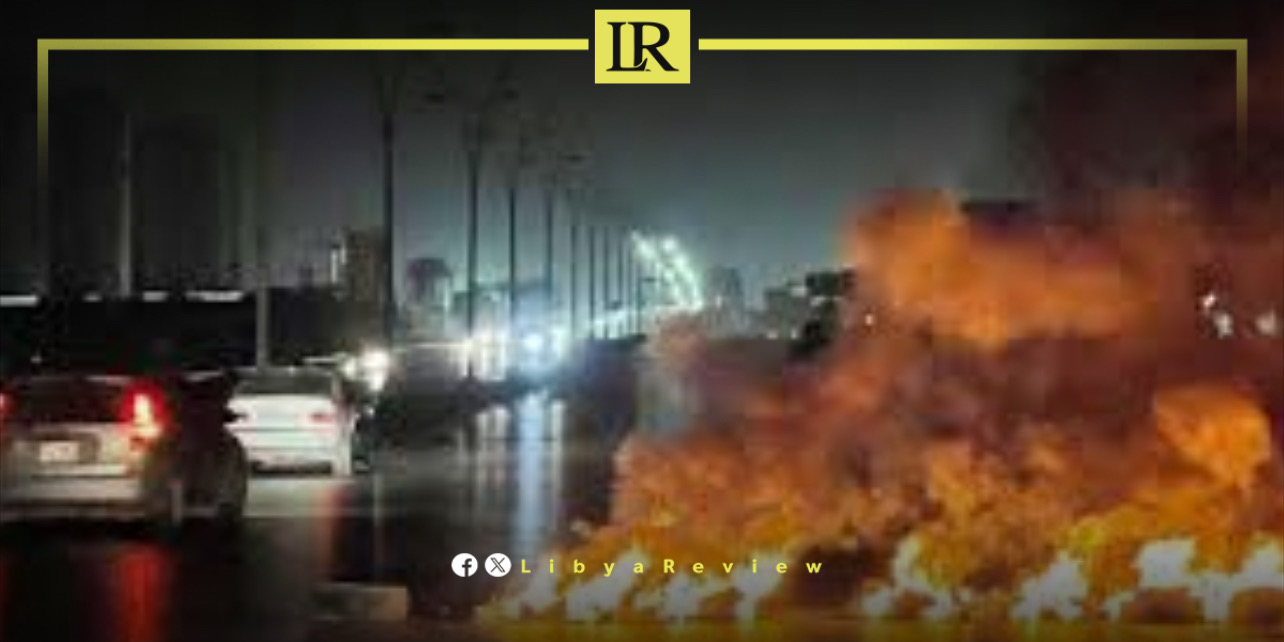
Nighttime protests broke out in several parts of the Libyan capital Tripoli, as demonstrators set tires on fire and blocked key roads in a renewed expression of public anger over the political stalemate and the continued presence of the Government of National Unity.
According to local reports, protesters gathered late at night at multiple locations, including the Hani traffic light junction and Al-Zahra Roundabout, where burning tires and road closures disrupted traffic and drew the attention of security forces. The demonstrations reflected growing frustration among residents over deteriorating living conditions and the absence of a clear political horizon.
Chants and slogans focused on rejecting the continuation of the government led by Abdel-Hamid Dbaiba, with protesters calling for the removal of all existing political bodies. Participants accused the current political class of clinging to power despite expired mandates and failing to deliver meaningful reforms or nationwide elections.
The protests come amid a broader wave of public discontent in western Libya, driven by economic pressures, electricity shortages, rising prices, and persistent security concerns. Many demonstrators argue that the ongoing institutional deadlock has deepened public mistrust and prolonged instability in the country.
While the gatherings were described as spontaneous and decentralized, observers note that nighttime protests and road blockades have increasingly become a tactic used by angry residents to draw attention to their demands. Similar demonstrations have been recorded in recent months, reflecting a pattern of recurring unrest in the capital.
So far, authorities have not issued an official statement addressing the latest protests. However, the scenes underscore the fragile security and political environment in Tripoli, where public patience with the prolonged transition period appears to be wearing thin.
As Libya continues to struggle with competing governments, divided institutions, and delayed elections, analysts warn that repeated street protests could escalate if political leaders fail to respond to popular demands for change and a comprehensive political reset.

