
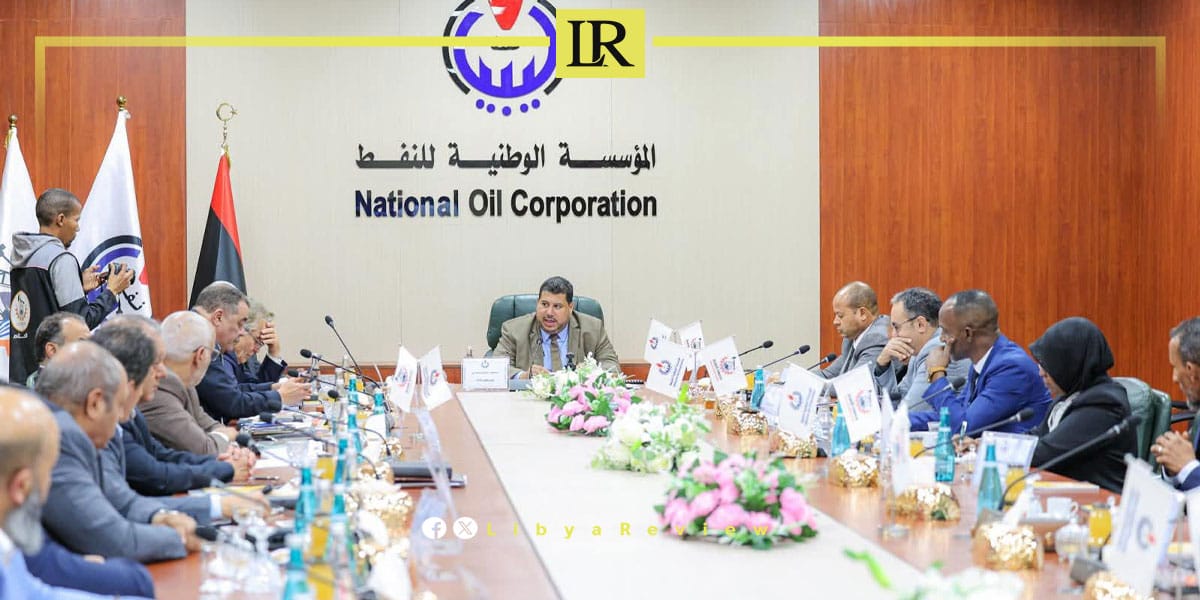
Libya’s National Oil Corporation said Akakus Oil Operations Company exceeded its production target, lifting output above planned levels despite financial constraints.
In a statement, the NOC said Akakus had surpassed the set target of 320,000 barrels per day, reaching an actual production rate of about 325,796 barrels per day as of Dec. 30, 2025.
The corporation attributed the increase to a package of technical measures and projects aimed at improving field efficiency and sustaining operations across key assets.
According to the statement, the work included tying in 10 new wells and commissioning a strategic project that enabled the transfer of surplus production from the I&R area to the main separation station at NC-186.
The NOC said the project enhanced operational capacity while maintaining full compliance with engineering standards and occupational safety requirements.
It noted that the achievement was recorded despite major challenges facing the sector, including limited resources and delays in the disbursement of budgets required for the National Oil Corporation and its subsidiaries.
Libya’s oil industry has faced repeated operational and financial pressures in recent years, with infrastructure constraints and funding gaps affecting maintenance and expansion plans.
The corporation said sustaining higher output under such conditions reflected strong coordination between technical teams and management, as well as effective use of available resources.
The chairman and board members of the NOC extended their thanks to Akakus and its workforce for what they described as exceptional efforts under difficult circumstances.
They reaffirmed the corporation’s support for national staff working to maintain production sustainability and raise output levels across Libya’s oil fields.
The NOC said continued investment in technical solutions and workforce capacity would remain central to safeguarding production and ensuring stable supplies to global markets.
Oil revenues are vital to Libya’s economy, and production performance remains closely watched amid stabilisation efforts.

