
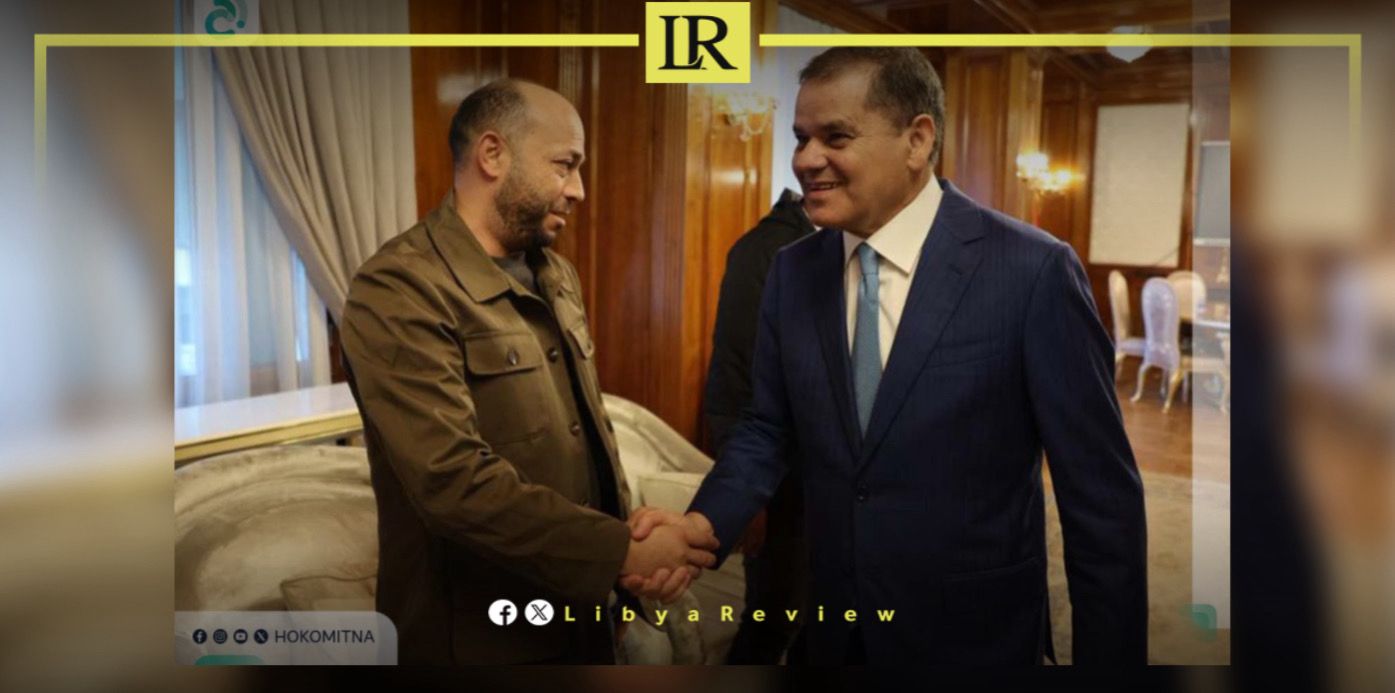
The National Institution for Human Rights in Libya (NIHRL) has strongly criticised Prime Minister Abdulhamid Dbaiba after he reportedly received Mohammed Al-Amin Al-Arabi Kashlaf, known as “Al-Qasab”, an individual listed under United Nations Security Council sanctions.
In a statement, the institution said the meeting constituted a serious breach of binding Security Council resolutions, noting that Kashlaf has been sanctioned since 2018 under Resolution 1970 and subsequent measures related to migrant smuggling, fuel trafficking, and grave human rights abuses.
The organisation said the Government of National Unity should have moved to arrest and surrender the sanctioned individual to judicial authorities, in line with Libya’s international obligations. Instead, it argued, the reception sent a damaging signal that undermines the rule of law and weakens cooperation with international accountability mechanisms.
According to the statement, Kashlaf is accused of crimes against irregular migrants, including trafficking, exploitation, extortion, and other violations of international humanitarian and human rights law. The institution warned that any political engagement with sanctioned figures risks providing protection and encouragement for further abuses.
The human rights body further alleged that the incident points to troubling links between elements of the GNU and networks involved in fuel smuggling and human trafficking in western Libya. It said such practices contribute to impunity and prolong organised criminal activity.
Kashlaf is described as a militia commander in Al-Zawiya, west of Tripoli, with influence over detention facilities for migrants and control over strategic infrastructure, including areas surrounding the Al-Zawiya refinery. These sites have been repeatedly cited in reports on fuel smuggling routes and migrant trafficking operations.
The institution called on Prime Minister Dbaiba and his government to comply fully with international sanctions regimes, ensure the handover of wanted individuals to the judiciary, and reaffirm Libya’s commitment to justice. It stressed that accountability remains essential to protecting human rights and restoring.

