
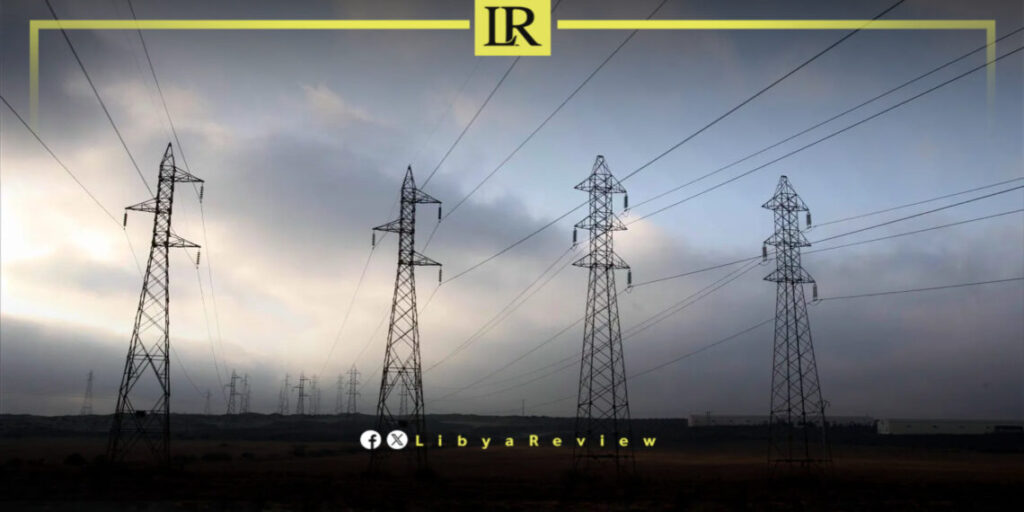
The Libyan Ministry of Electricity and Renewable Energy in the Parliament-designate government has intensified efforts to stabilise the national power grid following a series of high-level field visits to eastern Libya, according to official statements.
Ministry spokesman Rabie Khalifa said Electricity Minister Awad Al-Badri recently carried out extensive inspections across several eastern municipalities, including Al-Bayda and the Green Mountain coastal areas. The visits lasted 72 continuous hours and focused on closely assessing the condition of the electricity network and addressing technical faults on the ground.
Khalifa explained that the inspections were conducted in line with directives from the Deputy Commander-in-Chief, Lieutenant General Saddam Khalifa Haftar, and were coordinated with Prime Minister Osama Hammad and the Director General of the Libya Development and Reconstruction Fund, Belgassem Khalifa Haftar.
During the tour, the minister met residents and reviewed long-standing electricity problems, including areas that had never previously been connected to the grid. Particular attention was given to Al-Bayda, where infrastructure challenges have persisted for years.
The ministry announced the launch of two major projects through the National Distribution Projects Company to resolve these issues. Immediate action was taken to supply electricity to a residential community in the Omar Al-Mukhtar municipality south of Al-Bayda, established in 1999, which only received power for the first time in 2026.
Additional interventions covered Taknis and Farzouga, where prolonged power cuts were resolved through the installation and activation of 11-kilovolt electrical cells. Repairs were also completed at Al-Marj station following a previous fire, significantly improving supply stability across surrounding areas.
Khalifa confirmed that ministry teams are operating around the clock, coordinating with national companies and cable specialists to ensure uninterrupted service. He stressed the ministry’s commitment to relying on national expertise, engaging young graduates, and modernising the sector to guarantee reliable electricity across Libya.

