
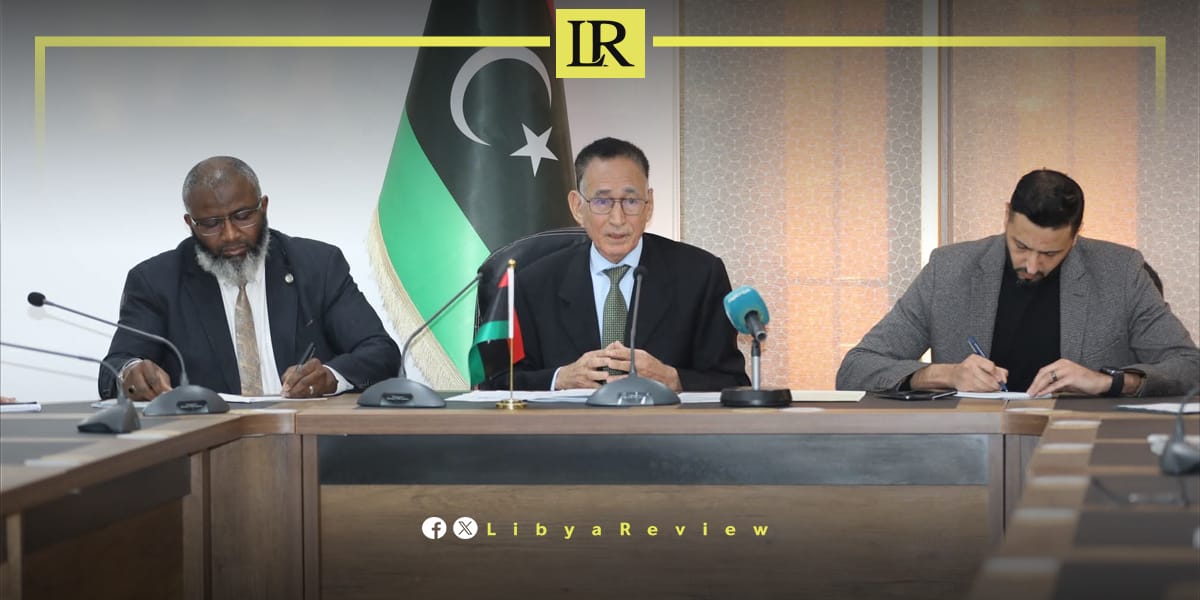
Libya’s Minister of Economy and Trade, Mohamed Al-Hwaij, has announced a package of measures aimed at regulating the local market and curbing price volatility, as part of broader efforts to strengthen food and consumer security across the country.
The announcement was made during an expanded meeting to review technical reports on market conditions, commodity availability, and price levels, according to a statement published by the ministry. The meeting also assessed the performance of the ministry’s technical departments responsible for monitoring and organising market activity.
Al-Hwaij confirmed the start of implementing a guiding import budget that sets clear import priorities in coordination with the Central Bank of Libya. He said the step is designed to regulate supply flows, reduce pressure on foreign currency, and improve control over the availability and pricing of essential goods.
The minister also revealed that the government has been formally approached to reactivate the Grain Authority and to restructure the Price Balance Fund in line with current economic conditions. These measures, he said, would support the ministry’s plan to stabilise the market, regulate imports, and ensure greater price control.
During the meeting, Al-Hwaij instructed officials to finalise a draft decision setting fixed prices for strategic basic commodities. Once approved, the decision will be referred to regulatory and enforcement bodies tasked with applying it in local markets. He also called for closer cooperation with oversight agencies to regulate wholesale distribution and tighten supervision of commercial activities.
The meeting further reviewed observations related to the work of technical departments and offices within the ministry, alongside an executive programme aimed at improving operational mechanisms and strengthening institutional capacity.
In closing, Al-Hwaij stressed the importance of enhanced coordination between the foreign and domestic trade departments, chambers of commerce, and the Central Bank. He urged continued monitoring of import operations and price trends, and proposed the creation of a real-time national price platform involving relevant authorities to improve transparency and market stability across Libya.

