
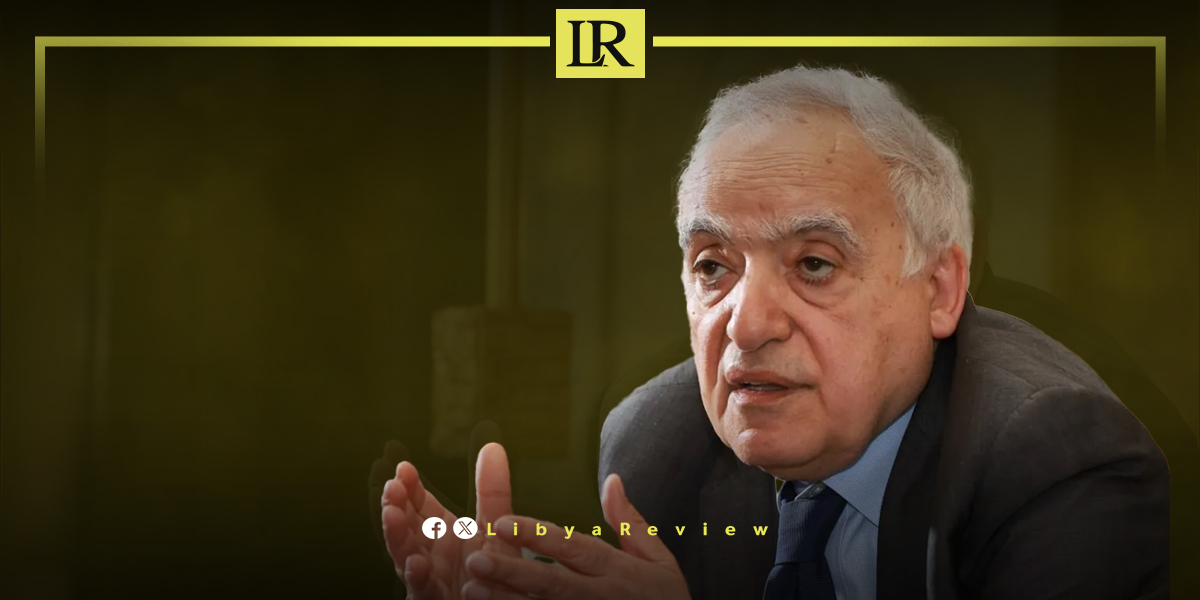
Ghassan Salameh, former Special Representative of the UN Secretary-General and former head of the UN Support Mission in Libya, said that regional powers hold far greater interests and influence in Libya than European countries, a reality that continues to shape the country’s political trajectory and obstruct meaningful change.
Speaking in an interview on the Atheer podcast, Salameh explained that political obstruction in Libya rarely takes the form of openly blocking a rival candidate. Instead, he said, external actors work to prevent any situation in which their opponents might succeed in empowering a Libyan ally capable of consolidating authority on the ground. This dynamic, he noted, has repeatedly undermined electoral efforts and prolonged institutional paralysis.
Salameh stressed that Libya represents a highly specific case that must be properly understood before proposing political solutions. He described Libya as a rentier state heavily dependent on oil revenues, with a vast geographic size and a relatively small population. While tribal structures can be mobilized to stabilize certain situations, he argued, they do not fundamentally alter political behavior or decision-making patterns.
According to Salameh, European countries often overestimate their leverage in Libya, while underestimating the decisive role played by regional actors. He said regional states possess deeper security, economic, and strategic interests in Libya, giving them far greater incentive and capacity to influence outcomes. This imbalance, he added, explains why regional interference often outweighs international diplomatic initiatives.
The former UN envoy also offered a critical assessment of Libya’s governance crisis, arguing that successive governments should not be viewed as ideological or political projects. Instead, he said, governments in Libya function primarily as channels for redistributing national wealth, rather than institutions built around policy agendas or reform programs. This reality, he explained, fuels competition for executive authority and deepens fragmentation.
Despite the entrenched challenges, Salameh emphasized the need to continue pursuing new political initiatives to break the deadlock. However, he cautioned that any serious effort must be grounded in a realistic understanding of Libya’s internal dynamics and the powerful role played by regional interests, warning that ignoring these factors would only reproduce past failures.

