
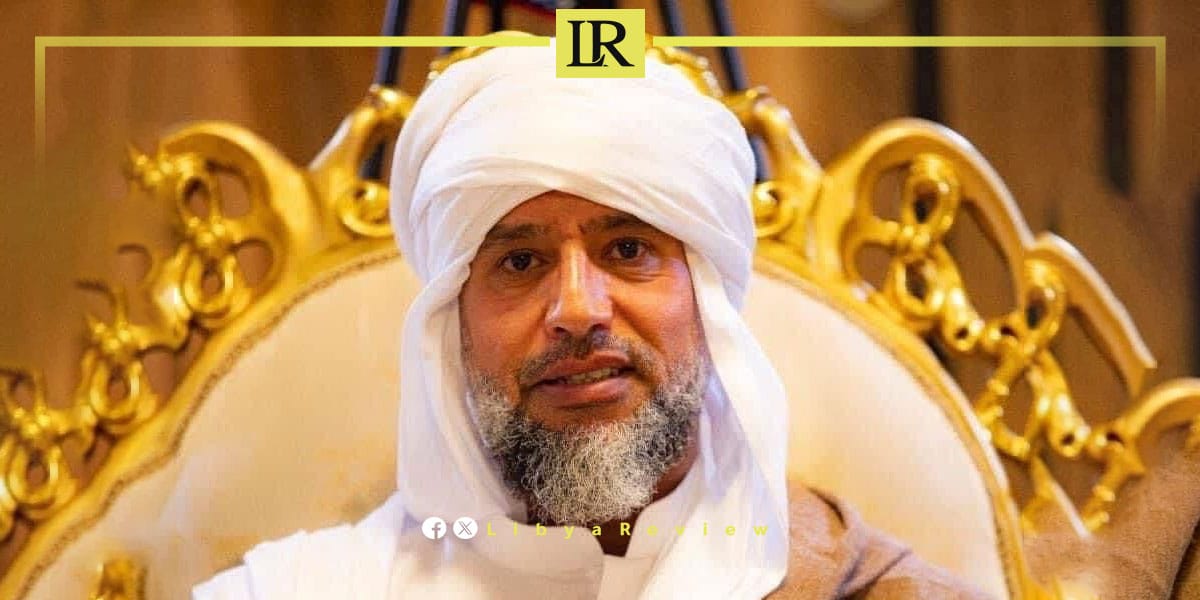

Saif al-Islam Gaddafi, the son of Libya’s late leader Muammar Gaddafi, said in a lengthy statement that Libya’s independence in 1951 represented an incomplete and conditional sovereignty shaped by Cold War rivalries rather than a fully national decision.
In the statement, titled “Pseudo-Independence or Incomplete One: Libya” and opened with a religious invocation, Saif al-Islam argued that Libya’s modern statehood emerged from international power competition between the Soviet Union and Western states, not from the free will of the Libyan people.
He cited historical documents and memoirs, including those of former UN envoy Adrian Pelt, to support his claim that Libyan independence was the outcome of a compromise among global powers seeking to prevent Soviet influence in the southern Mediterranean. According to the statement, Western states favoured formal independence as a means of securing military bases and economic influence without assuming direct administrative responsibility for the country.
Saif al-Islam said that following independence, Libya remained effectively under foreign control through military agreements, foreign advisers embedded across state institutions, and economic dependence on aid and base rental payments. He argued that British, American and French influence extended to financial oversight, military appointments and judicial institutions, undermining Libya’s sovereignty.
The statement also criticised the role of the monarchy under King Idris al-Senussi, claiming that foreign powers shaped the political system, constitution and security arrangements. It said the constitution was drafted under international supervision and designed to entrench external influence while limiting popular participation.
Saif al-Islam further argued that parts of Libya, particularly the Fezzan region, remained under effective foreign occupation years after independence, while Italian settlers retained economic privileges acquired during the colonial period. He described this period as one of “nominal independence” rather than genuine self-rule.
According to the statement, opposition to foreign military bases and political interference was suppressed, with nationalist figures exiled or imprisoned. Saif al-Islam said this repression deepened public resentment and reinforced perceptions that the post-1951 state lacked real sovereignty.
He argued that Libya only achieved full independence after the 1969 revolution, which led to the closure of foreign bases, the removal of foreign advisers and the expulsion of remaining colonial-era settlers. He described that moment as the first time Libya exercised full control over its political, military and economic decisions.
The statement also linked Libya’s later confrontations with Western powers, including military clashes and sanctions, to Muammar Gaddafi’s refusal to accept external dominance. Saif al-Islam said Libya’s loss of sovereignty after 2011 marked a return to foreign influence and external intervention.
He concluded that Libya’s history demonstrates a clear distinction between symbolic independence and genuine sovereignty, arguing that the country continues to struggle with the consequences of externally imposed political arrangements.