
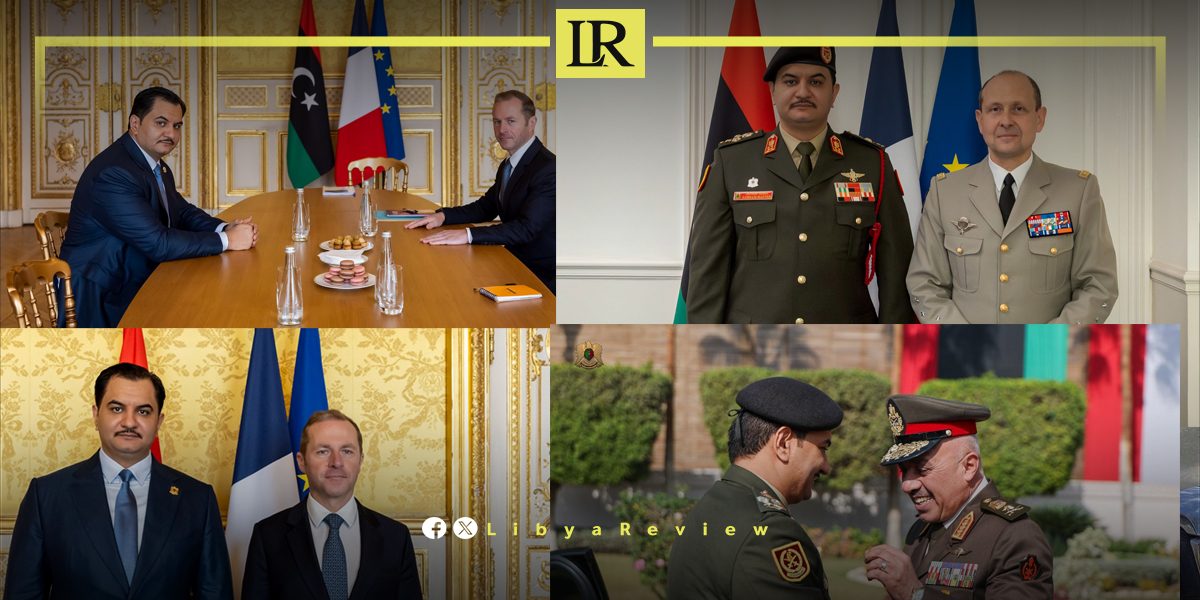
The recent foreign visits by Saddam Khalifa Haftar, Deputy Commander-in-Chief of the Libyan National Army, signal an increasingly active diplomatic and security engagement by the General Command and reflect its growing presence on both the regional and international stages.
These visits come at a critical juncture for Libya and its surrounding region, where security challenges increasingly transcend borders. Issues such as terrorism, organized crime, and border instability require close coordination with key regional and global partners. In this context, the General Command’s engagement abroad underscores an effort to align Libya’s military priorities with broader international security frameworks.
Haftar’s visit to Paris carried particular political and strategic significance. The high-level reception he received and his meetings with senior French officials at the Élysée Palace reflected a level of trust in the Libyan armed forces’ role in combating terrorism and containing the spread of extremist groups. French officials view stability in southern Libya as essential to wider security in the Mediterranean basin and the Sahel, making cooperation with Libyan military institutions increasingly important.
The discussions in Paris also highlighted a shared interest in strengthening bilateral cooperation, especially in training, capacity building, and military development. These areas are seen as critical to enhancing the effectiveness and professionalism of Libyan forces while contributing to long-term regional stability.
Similarly, Haftar’s visit to Cairo reaffirmed the depth of strategic relations between Libya and Egypt. The official reception and meetings with senior Egyptian military leaders reflected strong coordination between the two armed forces and a convergence of views on key security challenges. Egypt’s continued support for Libya’s unity and territorial integrity featured prominently, alongside joint efforts to secure borders and counter terrorist threats.

