
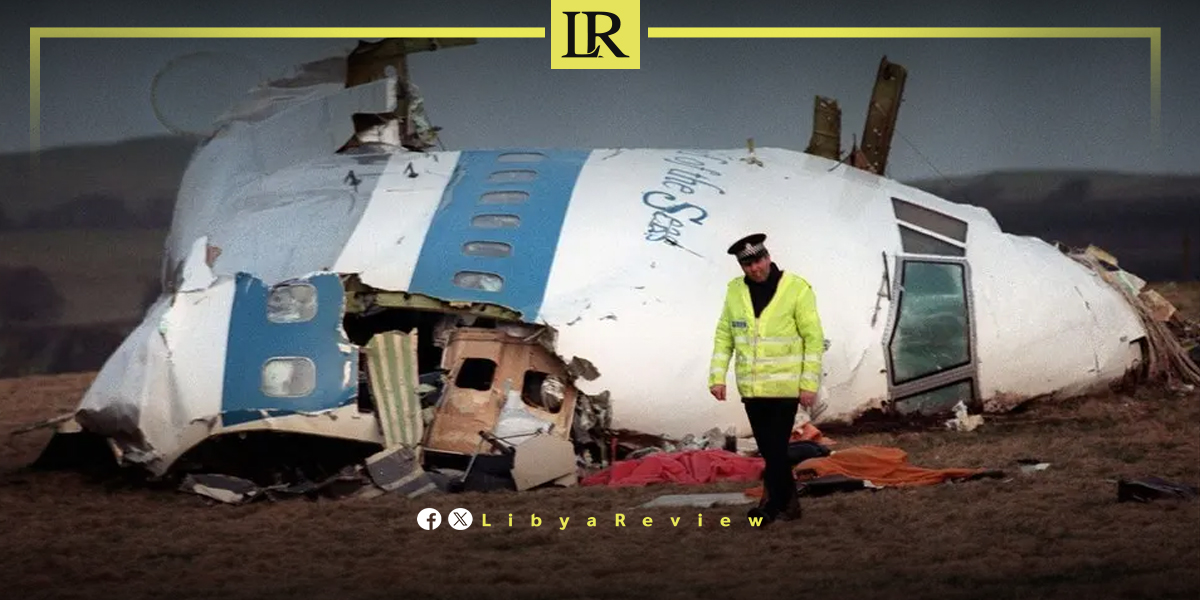
More than 38 years after the bombing of Pan Am Flight 103, the Lockerbie case continues to cast a long shadow over Libya, remaining one of the most controversial and unresolved chapters in the country’s modern history. According to a recent report by Jeune Afrique, the case is far from closed, despite decades of investigations, trials, and official admissions.
The aircraft exploded over the Scottish town of Lockerbie on December 21, 1988, killing 270 people, including 189 American citizens. The attack led to years of international isolation for Libya, severe economic sanctions, and long-lasting political consequences that reshaped Libya’s foreign relations and internal dynamics.
Jeune Afrique notes that Libya’s role in the case has once again returned to international attention following renewed legal proceedings in the United States and revelations surrounding missing evidence. Central to the current controversy is Abu Agila Masud, a former Libyan intelligence officer and the only surviving suspect now facing trial in Washington. Masud is accused of helping prepare the explosive device used in the attack, but his case has been complicated by the unexplained disappearance of a video recording allegedly containing his confession.
The confession was reportedly obtained by the FBI in 2012 while Masud was held in a Libyan prison. During recent court hearings, his defense team argued that the statement was extracted under torture and said the loss of the recording seriously undermines the prosecution’s case. Masud’s lawyers have called for the case to be dismissed, citing weak evidence and the passage of time, which they argue makes a fair trial impossible.
The report recalls that Libya formally accepted responsibility for the Lockerbie bombing in the early 2000s as part of a broader effort to normalize relations with the West. That process included compensation for victims’ families and the conviction of Abdelbaset al-Megrahi, who was sentenced to life in prison in 2001 before being released on medical grounds in 2009 and later dying in Libya.
Despite these steps, Jeune Afrique concludes that unresolved questions, missing evidence, and fading witness testimony continue to cloud the truth. For Libya, the Lockerbie case remains not only a legal matter but a symbol of the high political and diplomatic costs of a past era whose consequences are still unfolding today.

