
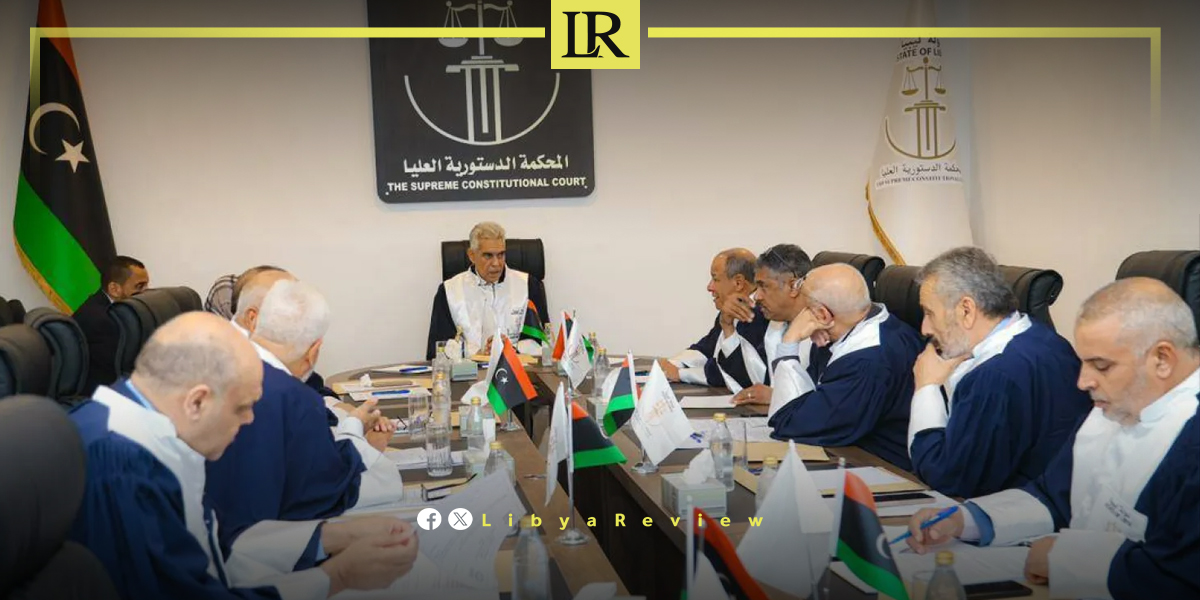
Libya’s Supreme Constitutional Court, sitting in Benghazi, has issued a ruling that decisively affirms the legal legitimacy of the House of Representatives and confirms its exclusive authority as the country’s legislative body, bringing renewed clarity to a long-disputed constitutional question.
The court ruled in favor of the constitutionality of Law No. (1) of 2020, which annulled laws and decisions issued by the former General National Congress after the expiration of its legal mandate.
In its decision, the court stated that the House of Representatives derives its authority directly from the Constitutional Declaration and its amendments, granting it full legislative powers and the right to correct legal and institutional distortions resulting from Libya’s prolonged transitional period.
According to the ruling, the House of Representatives is the sole body vested with the authority to enact legislation, and its laws fall squarely within its constitutional jurisdiction. The court stressed that measures taken by parliament to eliminate overlapping or conflicting legislation are lawful and necessary to restore institutional order after years of political division and parallel authorities.
The court’s decision also addressed a pivotal issue from Libya’s recent past by declaring null and void a 2014 ruling issued by the now-defunct Constitutional Chamber of the Supreme Court. That earlier decision had questioned the validity of the House of Representatives and one of the amendments to the Constitutional Declaration. The Benghazi court concluded that the ruling lacked legal standing, as it was issued by a judicial body that did not have jurisdiction over constitutional texts.
The court clarified that the former Constitutional Chamber’s mandate was limited to reviewing the constitutionality of laws, not constitutional declarations themselves, rendering its 2014 ruling legally ineffective from the outset.

