
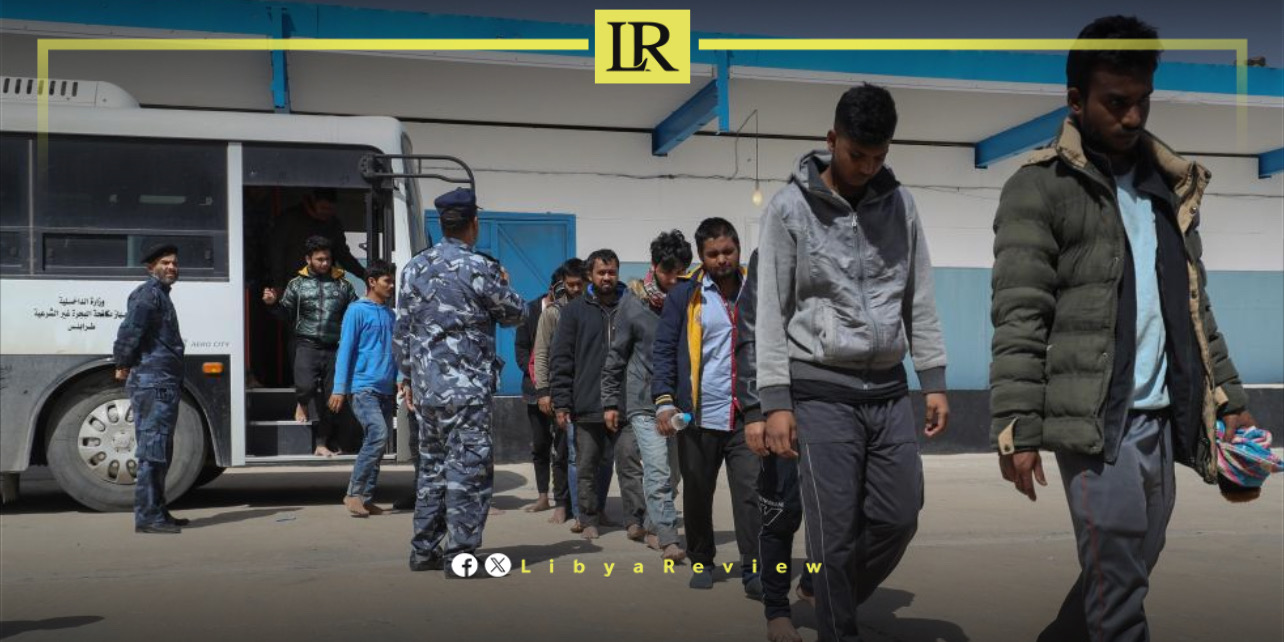
Libyan authorities have deported 69 irregular migrants of Egyptian nationality from Benghazi as part of ongoing efforts to combat illegal migration and strengthen public security, according to the Anti-Illegal Migration Agency.
The agency’s Greater Benghazi branch said the deportation was carried out in line with instructions from the agency’s headquarters and within a broader campaign to regulate the presence of undocumented migrants across eastern Libya. Officials confirmed that the group included individuals suffering from infectious diseases as well as others subject to security restrictions, underscoring the security and public health concerns associated with irregular migration.
According to the statement, the migrants were first transferred from the Greater Benghazi branch to the Tobruk branch, where final arrangements were completed before their removal from Libyan territory via the Emsaed land border crossing with Egypt. The agency said all legal, security, and medical procedures were followed in accordance with applicable laws and regulations.
Authorities stressed that dealing with cases involving health risks and security records requires firm but organized action to protect public safety while maintaining procedural standards. The agency reiterated its commitment to handling migration cases within a legal framework that balances security needs with humanitarian considerations.
Libya remains a key transit country for irregular migration due to its geographic location and long land and sea borders. Officials say this reality continues to place heavy pressure on security institutions and public services, particularly in major cities such as Benghazi. As a result, deportation operations have become a central component of national efforts to curb illegal migration and disrupt smuggling networks.

