
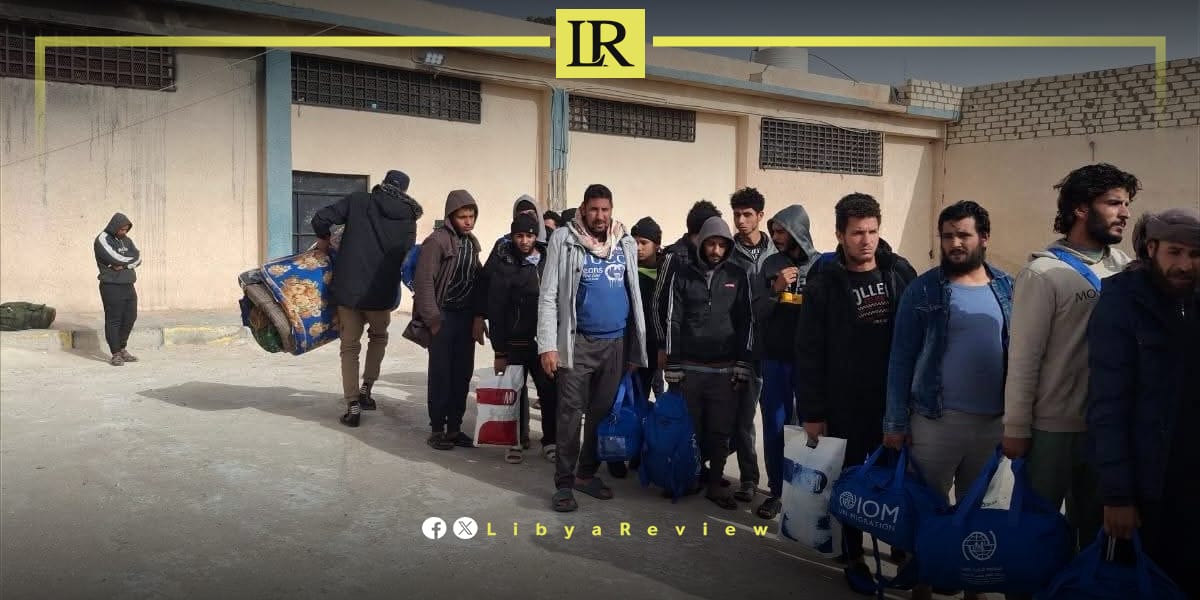
Libya’s Department for Combating Illegal Migration (DCIM) has announced the deportation of 40 undocumented migrants of Egyptian nationality from the city of Ajdabiya, as part of ongoing efforts to curb irregular migration and strengthen public security.
In a statement issued by the Ajdabiya branch of the DCIM, the department said the operation was carried out in line with instructions from the head of the national agency. The statement confirmed that the deported group included individuals suffering from infectious diseases, as well as migrants who were subject to official deportation orders.
According to the DCIM, several of those deported had been arrested after entering Libyan territory illegally, without valid travel documents or legal permission. Others were found to be in violation of residency regulations or posed potential public health risks, prompting authorities to take swift action.
The Ajdabiya branch stated that all procedures were implemented in accordance with established security and administrative regulations. It added that the deportation process was conducted under official supervision to ensure compliance with legal standards and coordination with the relevant authorities.
The operation forms part of Libya’s broader campaign to address irregular migration, which remains a major security and humanitarian challenge across the country. Libya continues to serve as a key transit point for migrants seeking to reach Europe, particularly via the central Mediterranean route.
Libyan authorities have repeatedly stressed that combating illegal migration is essential to maintaining internal security, protecting public health, and reducing criminal activities linked to human smuggling and trafficking networks. The DCIM has also highlighted the strain that irregular migration places on local communities and state resources.
In its statement, the Ajdabiya branch reaffirmed its commitment to continuing security operations within its area of responsibility. The department said it would maintain close coordination with national and local institutions to enforce migration laws and manage migration-related challenges.
The DCIM concluded by emphasising that similar measures would continue to be implemented across Libya as part of a comprehensive approach to tackling illegal migration and safeguarding national stability.

