
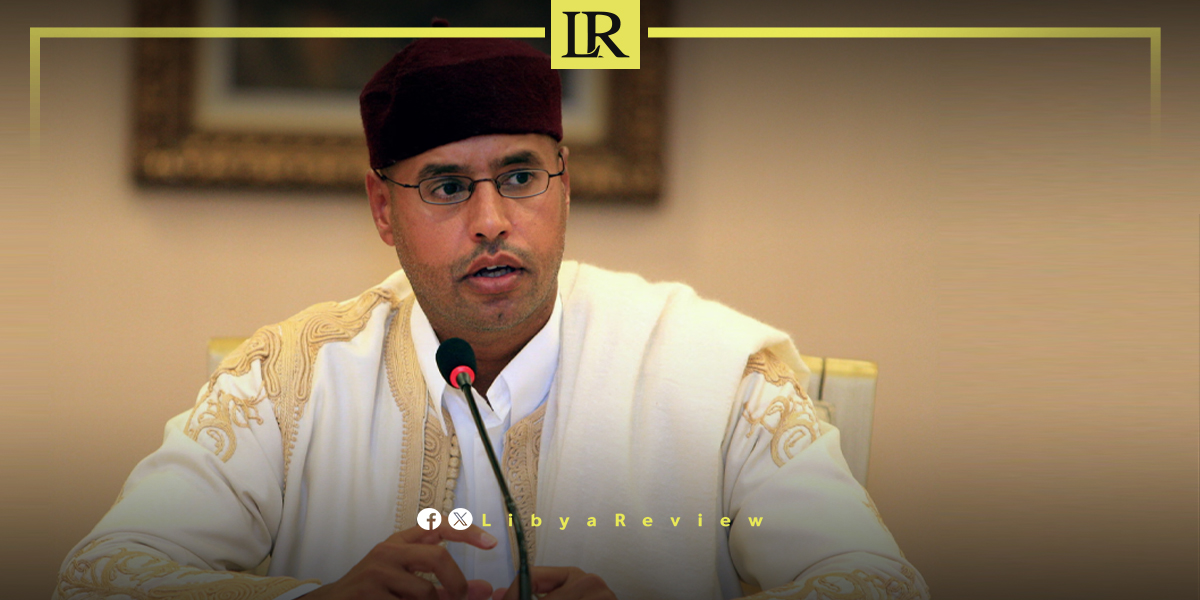
French newspaper Le Monde has raised serious questions about the true motives behind the killing of Saif al-Islam Gaddafi, suggesting that the assassination may reflect more than a simple act of personal revenge and could be linked to deeper political calculations within Libya’s fragmented power structure.
According to the report, Saif al-Islam had spent recent years living in near-total isolation in Zintan, a mountainous town southwest of Tripoli.
Once seen as a potential political heir to his father, he had largely disappeared from public life, becoming a shadowy figure surrounded by uncertainty, speculation, and unresolved legal and political disputes. His sudden killing on February 3 abruptly returned him to the center of Libya’s national debate.
Le Monde reported that armed attackers stormed his residence, killing him along with two guards assigned to protect him. Images circulating on Libyan social media showed his bloodstained body in the back of a pickup truck, while the perpetrators reportedly fled the scene without being identified.
The lack of clear information regarding those responsible has intensified speculation and raised concerns about accountability and impunity.
The newspaper emphasized that despite his long absence from active politics, Saif al-Islam remained a powerful symbol. To his supporters, he embodied the possibility of a dramatic political return that could restore stability after years of division and institutional collapse.
To his opponents, he represented the legacy of repression and violence associated with the former regime, making his mere existence a source of tension.
Le Monde argued that his attempted political comeback during Libya’s aborted 2021 presidential elections highlighted this duality. His candidacy, which reportedly attracted notable support in unofficial polls, alarmed rival political and military factions and contributed to the climate of uncertainty that ultimately derailed the electoral process.
Even without holding power, his presence complicated an already fragile political landscape.
The report suggested that multiple actors across Libya’s divided east and west may have had an interest in his disappearance, though it stopped short of assigning direct responsibility.
In this reading, Saif al-Islam’s death may serve to remove an unpredictable variable from Libya’s political equation, easing anxieties among entrenched elites while doing little to resolve the country’s deeper structural crises.

