
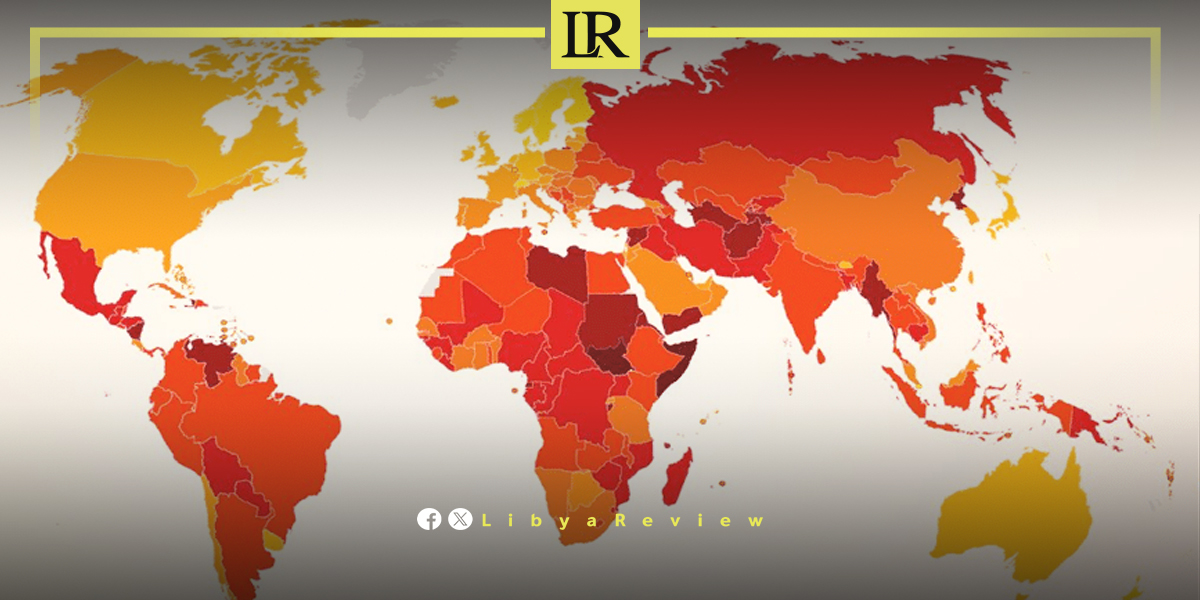
Libya has once again ranked among the world’s most corrupt countries, according to the 2025 Corruption Perceptions Index (CPI) released by Transparency International. The report places Libya 177th out of 182 countries, with a score of 13 out of 100, highlighting persistent weaknesses in integrity, governance, and anti-corruption efforts.
The CPI, one of the most widely cited global indicators of public sector corruption, shows that Libya remains among the lowest-performing countries worldwide and within the Middle East and North Africa (MENA) region. Alongside countries such as Syria and Yemen, Libya continues to suffer from entrenched corruption driven by prolonged political instability, internal divisions, and fragile state institutions.
Transparency International noted that ongoing conflict, political rivalries, weak infrastructure, and limited state resources have significantly undermined efforts to promote good governance. These conditions, the organization said, have relegated transparency and accountability to a low priority, allowing corruption to flourish across public institutions.
The report further observed that most countries in the MENA region have made little or no tangible progress in combating corruption. This stagnation was attributed to weak political commitment, fragile oversight bodies, and shrinking civic space, all of which create a permissive environment for corruption and abuse of power.
A regional adviser for the Middle East and North Africa at Transparency International warned that corruption remains deeply rooted in the region and continues to have a direct negative impact on citizens’ daily lives. The adviser stressed that addressing the problem requires strengthening transparency, safeguarding civic freedoms, and ensuring the independence of anti-corruption and oversight institutions. Adequate funding, legal authority, and operational autonomy were described as essential for these bodies to function effectively.
Transparency International urged governments across the region to pursue genuine reforms that reinforce accountability, expand civic space, and guarantee the independence of supervisory institutions. The organization also called for faster implementation of financial transparency reforms, warning that the absence of effective accountability mechanisms would allow corruption to persist and further undermine good governance.
First launched in 1995, the Corruption Perceptions Index evaluates 182 countries and territories based on expert assessments and business surveys, drawing on data from 13 international sources, including the World Bank, the World Economic Forum, and leading research and consultancy institutions.

