
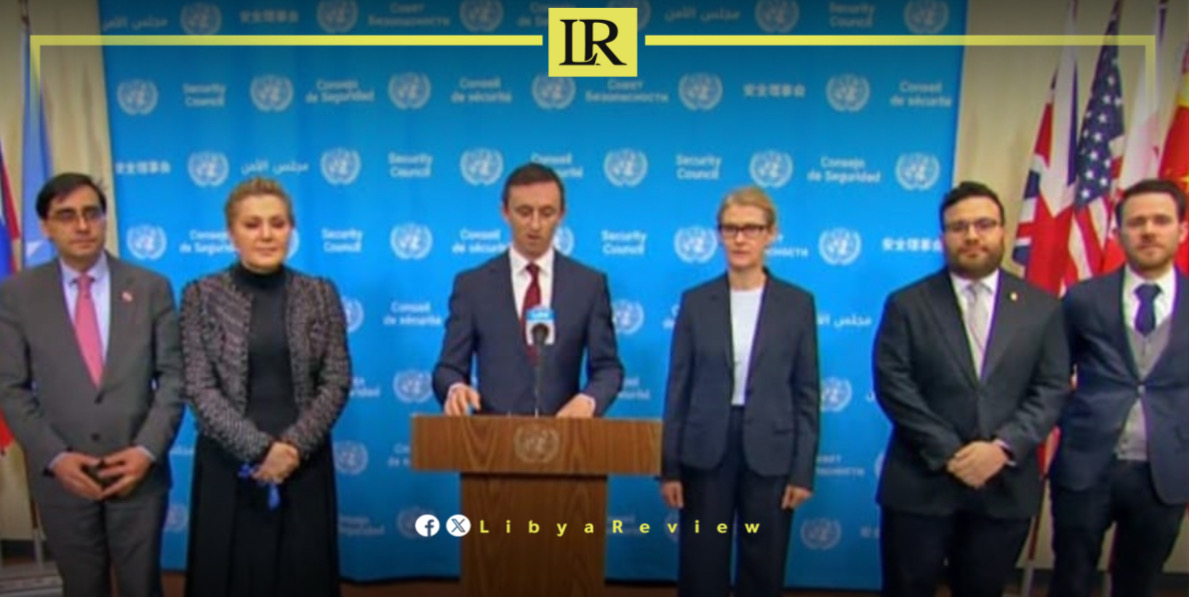
Denmark, France, Greece, Latvia, Liberia, Panama, and the United Kingdom have jointly urged Libyan leaders to resume the political process without delay, warning that prolonged institutional paralysis is weakening the country’s ability to confront growing climate and security threats.
In a joint statement issued in New York, the seven countries reaffirmed their commitment to the climate, peace, and security agenda.
They stressed that Libya’s political stalemate is compounding the impact of severe environmental pressures, including water scarcity, rising temperatures, and recurring floods. These challenges, they noted, are intensifying competition over resources, worsening livelihoods, and increasing the risk of displacement and instability.
The statement highlighted that Libya is among the most water-stressed countries globally, with less than two percent of its territory suitable for agriculture. Rainfall is expected to decline by seven percent by 2050, further straining already fragile systems. The countries warned that without unified governance and coordinated national planning, Libya will remain vulnerable to climate shocks that could deepen divisions and fuel insecurity.
The group called on Libyan stakeholders to relaunch a Libyan-led and Libyan-owned political process as soon as possible. They emphasized that the current deadlock restricts effective decision-making and limits the country’s capacity to prepare for or respond to environmental crises. The signatories also urged Libyan authorities to integrate climate-related peace and security risks into a unified national budget, grounded in inclusive and gender-sensitive policymaking.
They underlined the importance of empowering civil society, local authorities, youth, and women in shaping climate action. The countries welcomed UN efforts to support climate-focused initiatives and encouraged further investment in community-based resilience.
Referring to the 2023 Derna floods as a stark example of the consequences of weak disaster preparedness, the statement called for strengthening national disaster risk governance. It encouraged the development of a multi-hazard early warning system, a national climate risk registry, and improved coordination on climate financing to support long-term resilience.

