
Misrata is facing a new and sensitive security challenge after a series of rapid developments brought the issue of detainees linked to extremist groups back into focus, exposing the growing overlap between public pressure, political positioning, and armed influence on the ground.
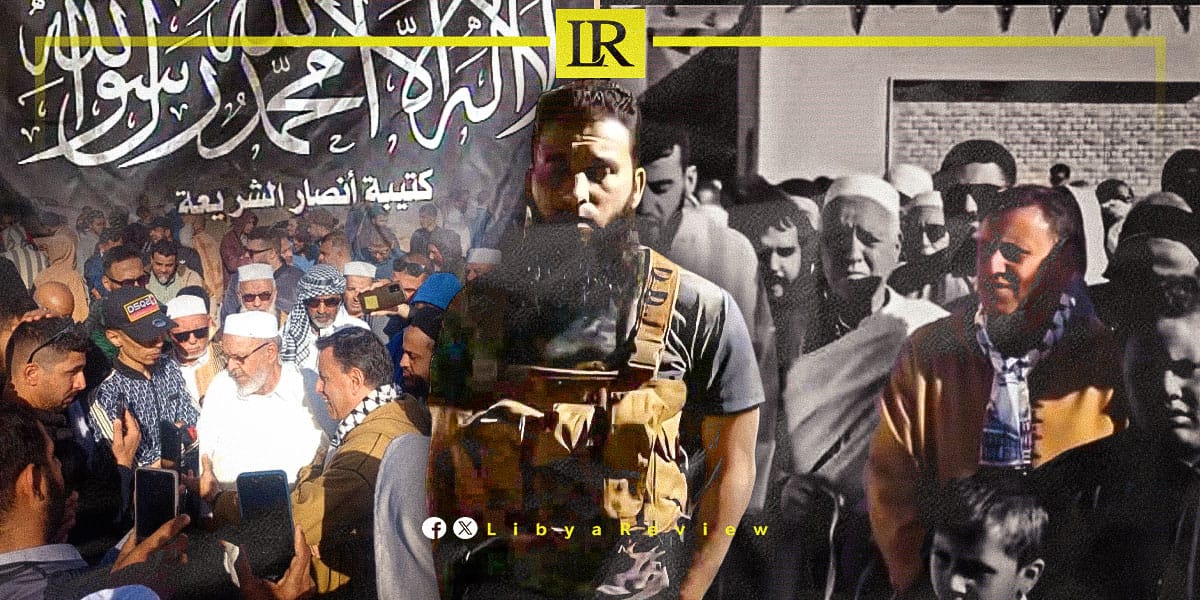
Protests erupted outside the headquarters of the General Intelligence Service in the city, where demonstrators — including local residents and individuals affiliated with the Benghazi Shura Council — gathered alongside prominent lawyer Fathi Terbil. The protesters called for the release of detainees held on charges related to terrorism, following the arrest of Abrik al-Mazik.
Al-Mazik is considered a key figure linked to the Ajdabiya Revolutionaries Shura Council and is believed to have participated in fighting against forces aligned with the Libyan National Army in the “Oil Crescent” region between 2014 and 2016 — a period defined by intense conflict and the expansion of armed extremist groups.
But the protests were only the beginning.
In a significant escalation, an armed group affiliated with the 63rd Infantry Brigade — aligned with Abdul Salam al-Zoubi, a senior defense official within the Government of National Unity — moved to seize control of a General Intelligence compound in Misrata. The development has raised serious concerns over the balance of power between state institutions and armed factions, and whether critical security decisions are being shaped through formal channels or force on the ground.
At the heart of the issue lies a broader and more politically charged question: who ultimately controls sensitive security files in Libya, particularly those tied to extremism?
Observers warn that decisions related to detainees accused of involvement in extremist networks must remain within judicial and legal frameworks. Any deviation, they argue, risks undermining institutional authority and opening the door to further instability — not just in Misrata, but across the country.
The developments have also reignited longstanding concerns about Misrata’s complex and often controversial role during Libya’s years of conflict. At various stages, factions within the city faced accusations of providing logistical and military support to extremist groups, including the transfer of weapons, fighters, and medical treatment to individuals linked to those networks during the height of the fight against terrorism.
Those concerns resurfaced alongside renewed references to the 2017 assassination of Misrata’s former mayor, Mohammed Eshtewi — an event widely viewed as a major setback to efforts aimed at steering the city away from militia influence and allegations of extremist ties. Eshtewi had been leading initiatives to reassert state control and reshape the city’s security landscape since his election in 2015.
Today, Misrata’s trajectory once again appears uncertain.
With its significant political, military, and economic weight, the city stands at a critical juncture — one that will test the ability of its institutions to assert control over armed actors, manage sensitive security files within the rule of law, and avoid a path that could see it drift toward becoming a new hub for extremist activity.
The stakes extend far beyond Misrata itself.
What unfolds in the city may ultimately shape broader perceptions of Libya’s stability — and determine whether one of its most influential power centers remains a pillar in the fight against extremism, or becomes a symbol of its resurgence.

