
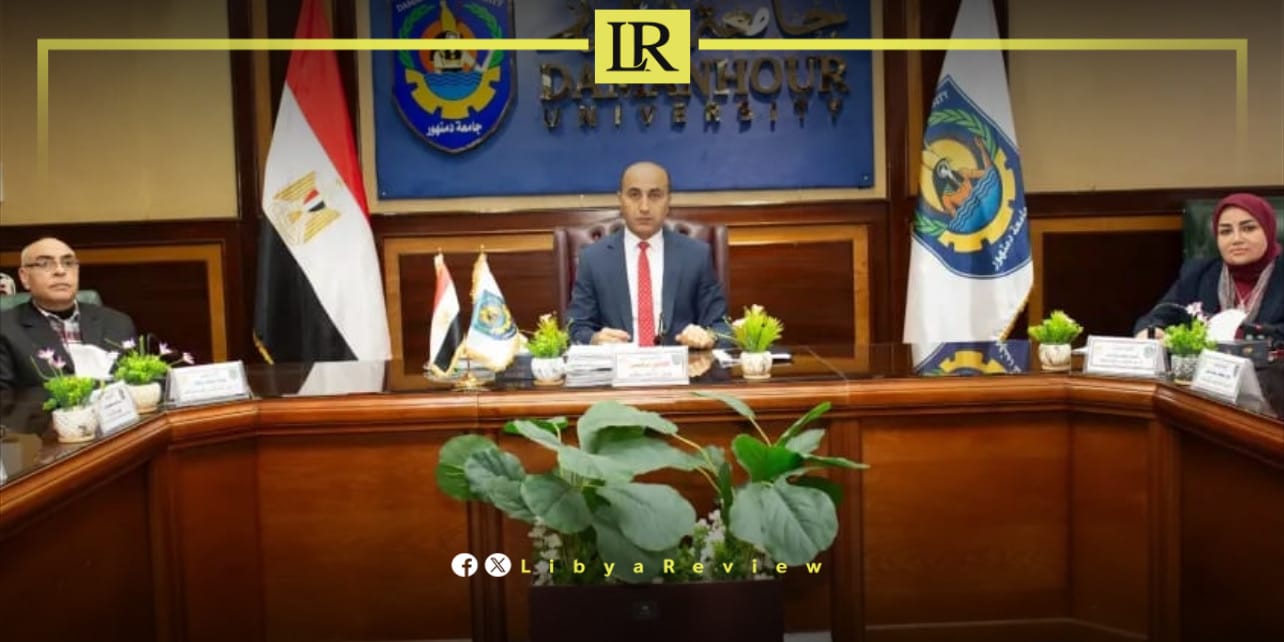
Dr Elhamy Trabes, President of Damanhour University, chaired the university’s regular council meeting on Tuesday, attended by vice-presidents, faculty deans, university advisers and the secretary-general, to review academic and research developments and discuss key institutional matters.
During the session, the council approved a series of cooperation protocols aimed at strengthening partnerships with Arab universities. Among the most notable agreements was a cooperation protocol between Damanhour University and Benghazi Private University in Libya.
Dr Trabes described the partnership as a pivotal step towards reinforcing academic and scientific collaboration between Egypt and Libya. He noted that the agreement would open new avenues for joint research projects, academic exchanges and knowledge transfer, benefiting both Libyan and Egyptian students and researchers.
The protocol is expected to facilitate cooperation in curriculum development, postgraduate studies and scientific conferences, as well as the exchange of faculty expertise. University officials emphasised that closer ties with Libyan institutions, particularly in Benghazi, reflect a broader commitment to supporting regional academic integration.
For Libya, the agreement offers opportunities to enhance research capacity and diversify academic programmes through collaboration with established Egyptian universities. Observers say such partnerships can contribute to rebuilding and modernising higher education institutions across Libyan cities, including Benghazi, by promoting international standards and joint initiatives.
Dr Trabes expressed his appreciation to the International Cooperation Office at Damanhour University for its efforts in expanding partnerships with reputable institutions across the Arab world. He stressed that academic diplomacy plays a crucial role in fostering sustainable development and strengthening cultural and scientific ties.
The move comes amid growing interest among Libyan universities in forging cross-border collaborations, particularly with Egyptian counterparts, to advance research quality and create broader educational opportunities for students.

