
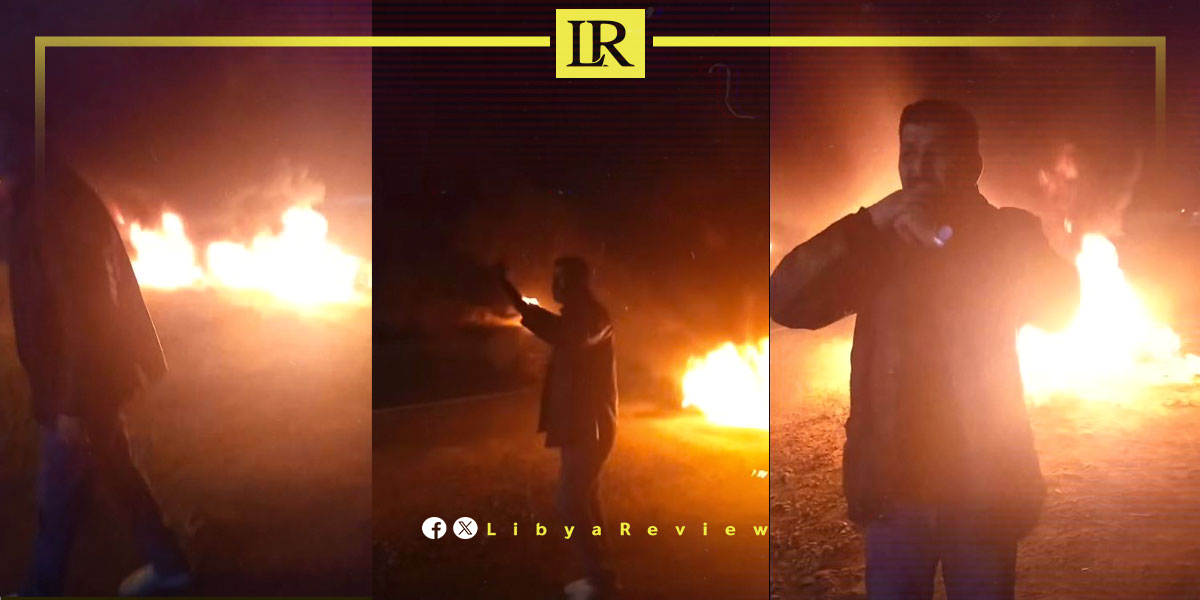
Libya is witnessing rising public anger after protests erupted in Al-Zawiya, where demonstrators set fire to a main checkpoint in a dramatic expression of frustration over worsening economic conditions.
The unrest has intensified debate over whether the country could face a broader wave of social upheaval as financial pressures mount.
The protests come against the backdrop of a sharp decline in the Libyan dinar on the parallel market, where the US dollar has climbed to record levels. The currency’s depreciation has driven up the cost of food, construction materials, clothing, and other essential goods, placing heavy strain on households already struggling with stagnant incomes and irregular public services.
Tensions escalated further following recent measures by the Central Bank of Libya to impose new fees on certain imports. Although basic commodities were officially exempted, traders warn that the broader impact of the additional charges will inevitably be reflected in higher consumer prices. Many citizens argue that the measures have deepened the burden rather than eased it.
The political response has added to public frustration. The Government of National Unity, led by Abdul Hamid Dbaiba, rejected responsibility for the decision, describing it as unilateral.
At the same time, a group of members of the House of Representatives distanced themselves from the move, stating that it was not formally endorsed in a full parliamentary session. The exchange has reinforced perceptions of institutional division and lack of coordination at a critical economic moment.
Observers note that while the protests remain concentrated in Al-Zawiya, similar economic grievances are evident across multiple cities. Recent strikes and demonstrations in sectors such as education and public administration suggest a broader climate of dissatisfaction.
With national elections tentatively planned for 2026, analysts warn that prolonged currency instability, inflation, and political fragmentation could complicate the country’s path toward stability. Whether the unrest spreads or subsides may depend largely on the authorities’ ability to restore confidence in economic management and deliver tangible relief to citizens.

