
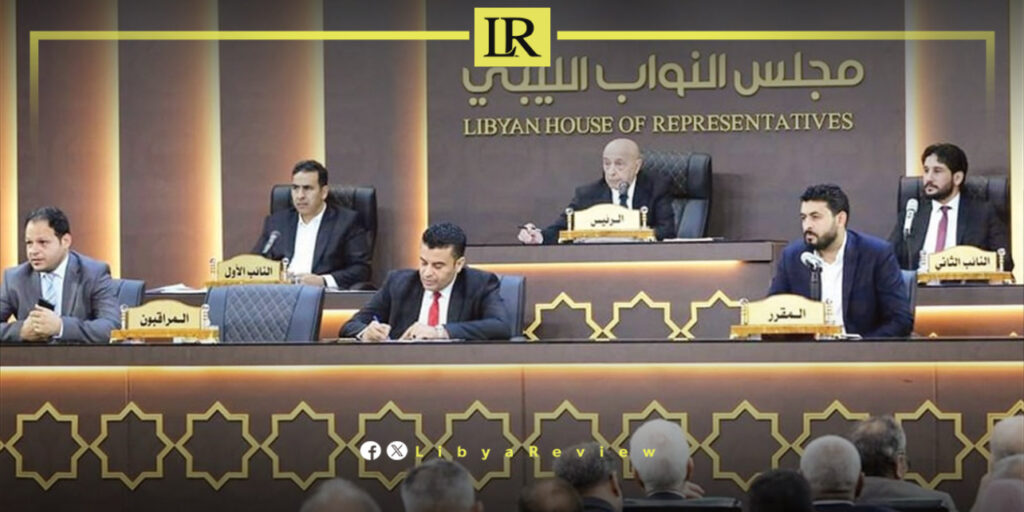
A public dispute has erupted within Libya’s parliament over the controversial decision to impose taxes on imported goods, a measure that has already been implemented by the Central Bank of Libya and triggered widespread public anger.
The disagreement centres on who authorised the tax law after opposition voices grew inside the Libyan House of Representatives. Several senior figures have issued conflicting statements, each denying responsibility for approving the measure.
Parliament Speaker Ageela Saleh said in a statement that the decision to impose taxes on certain imported goods was approved during a formal parliamentary session on 13 January chaired by First Deputy Speaker Fawzi al-Nuwairi. Saleh noted that he had not attended the session.
He added that once he became aware of the decision, he called for suspending the tax on essential and consumer goods in order to avoid placing additional financial pressure on citizens. Saleh said he had requested the governor of the Central Bank to halt the implementation of the measure until the matter is reconsidered by parliament.
However, Nuwairi rejected Saleh’s claims, describing them as inaccurate and an attempt to evade responsibility. In his own statement, he said the session he chaired was limited to previously scheduled items and did not include a decision to impose new taxes on imported goods.
The dispute widened after Second Deputy Speaker Misbah Douma also challenged Saleh’s account. Douma stated that the parliamentary session had merely discussed a proposal related to taxing some imported goods but did not adopt any official decision to implement it.
Douma urged the Central Bank of Libya to clarify the legal basis for applying the tax and identify the authorities involved in the decision.
The dispute comes amid rising public frustration over deteriorating economic conditions and price increases. Several Libyan cities witnessed protests recently, with demonstrators rejecting new taxes and demanding sweeping political change.

