
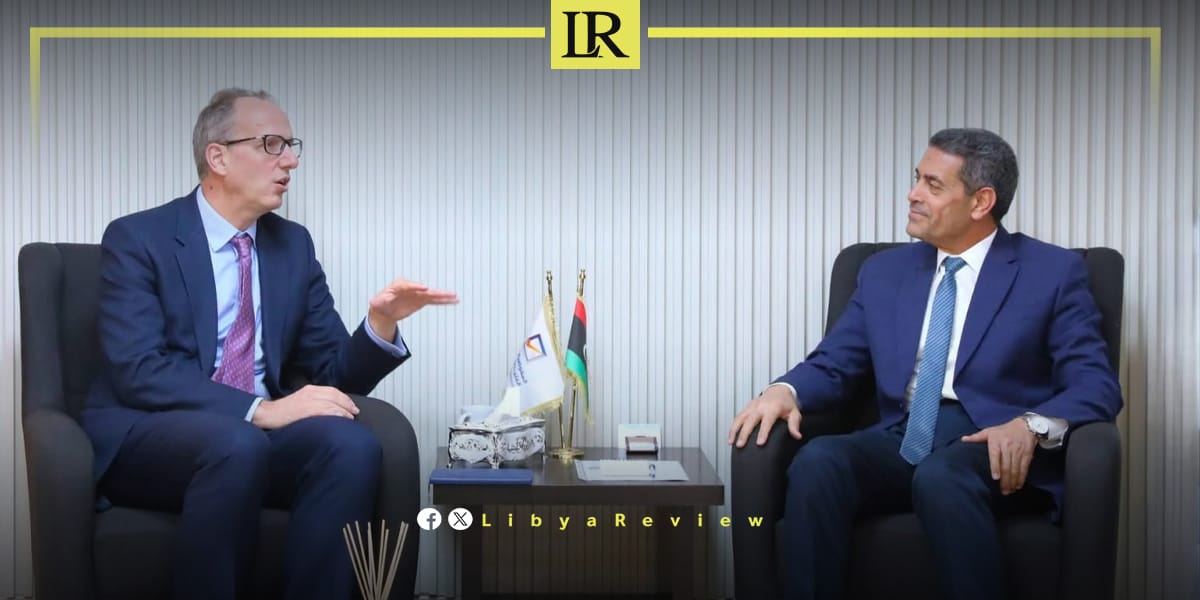
The Chairman of Libya’s High National Elections Commission, Emad Al-Sayeh, met the United Kingdom’s ambassador to Libya, Martin Reynolds, to discuss ways to strengthen cooperation in supporting the country’s electoral process.
The meeting took place at the headquarters of the elections commission in Tripoli and focused on international support for Libya’s upcoming electoral milestones. Officials discussed mechanisms through which international partners can assist the commission in organising elections in accordance with recognised technical and professional standards.
During the talks, Al-Sayeh outlined the commission’s ongoing preparations to organise national elections. He presented the body’s technical and logistical plans aimed at ensuring that the voting process can be carried out smoothly and transparently. The commission chief stressed that the institution remains committed to operating with full independence and neutrality while carrying out its constitutional mandate.
He added that the commission is working to ensure that Libyan voters are able to exercise their democratic rights in a safe and credible environment. According to Al-Sayeh, strengthening institutional readiness is essential to guaranteeing the integrity of the electoral process and maintaining public trust.
For his part, Ambassador Reynolds praised the efforts of the elections commission in managing electoral operations despite the complex political environment facing the country. He reaffirmed the United Kingdom’s continued support for initiatives aimed at advancing Libya’s democratic transition.
The British diplomat noted that international cooperation remains vital in helping Libyan institutions prepare for future elections and consolidate democratic governance. Support from international partners, he said, can contribute to improving electoral management, strengthening transparency and enhancing confidence in the outcome of future votes.
Libya has been working to organise long-awaited national elections as part of broader efforts to stabilise the country’s political landscape and strengthen state institutions following years of division and uncertainty.

