
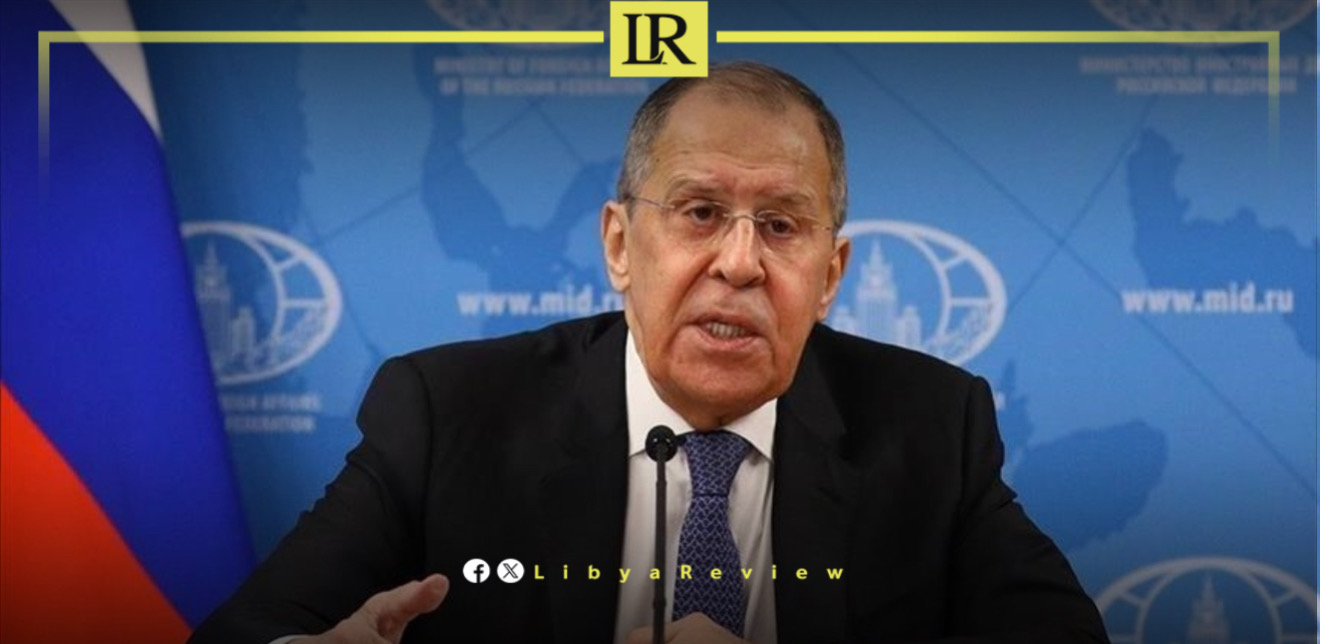
Russian Foreign Minister Sergey Lavrov has stated that Libya’s ongoing political divisions are rooted in the 2011 Western military intervention, describing it as the main trigger behind the country’s prolonged instability.
Speaking about the situation in Libya, Lavrov argued that the intervention led to the collapse of state institutions and created a power vacuum that continues to shape the country’s fragmented political landscape. He said the consequences of the 2011 events are still visible today, with competing authorities and unresolved divisions across Libya.
Lavrov emphasized that any meaningful resolution to the Libyan crisis must come through a comprehensive political settlement that includes all segments of society. He stressed the importance of an inclusive approach that brings together political, social, and regional actors without exclusion.
He also highlighted the role of the United Nations in facilitating a political solution, calling for a process that is balanced and based on dialogue. According to Lavrov, such a framework should respect Libya’s sovereignty and ensure that decisions are driven by Libyans themselves.
The Russian minister warned against continued external interference, stating that foreign involvement has often complicated efforts to reach stability. He called for coordinated international support that aligns with a Libyan-led political process rather than imposing external agendas.
Libya has experienced years of political fragmentation since 2011, with rival institutions and ongoing security challenges preventing the establishment of a unified government. Despite multiple diplomatic initiatives, progress toward a lasting solution has remained limited.
Lavrov reiterated that stability in Libya cannot be achieved without addressing the root causes of the conflict and ensuring that all major stakeholders are included in the political process. He stressed that excluding key actors risks prolonging the crisis and undermining any agreement.

