
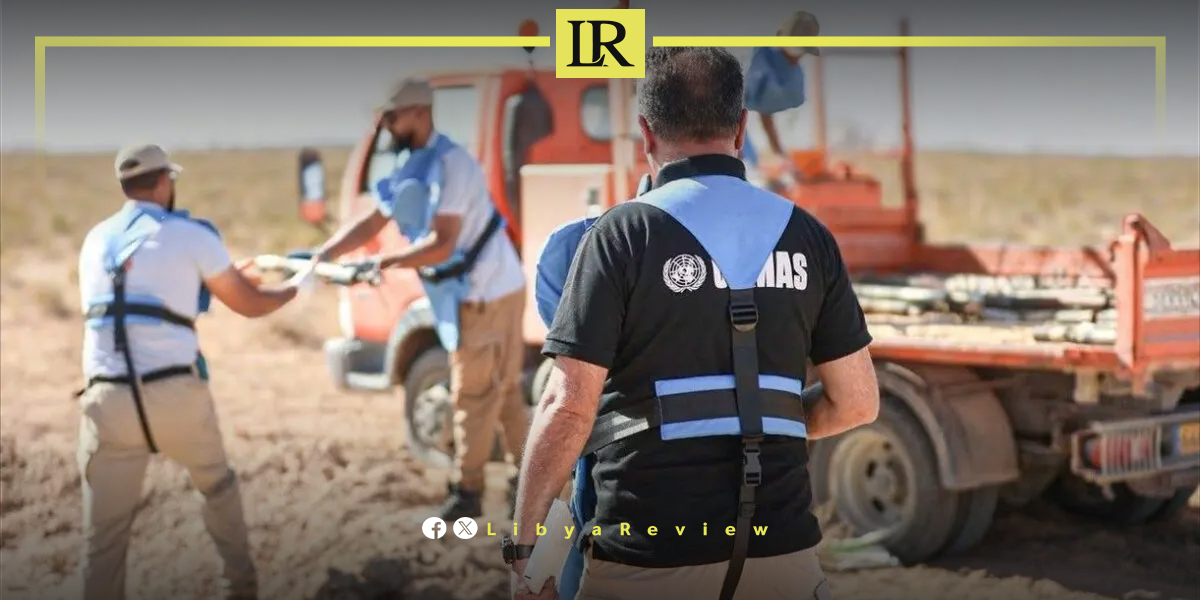

The United Nations Support Mission in Libya has called for intensified efforts and greater investment in mine action across Libya, warning that explosive remnants of war continue to pose a serious threat to civilians and hinder long-term stability.
In a statement marking the International Day for Mine Awareness and Assistance in Mine Action on April 4, held under the theme “Invest in Peace, Invest in Mine Action,” the mission stressed the urgent need for stronger national and international responses to address the growing danger.
UNSMIL said Libya remains heavily contaminated with explosive ordnance due to repeated cycles of armed conflict, compounded by unsafe ammunition storage practices. As a result, hazardous remnants are widely scattered across homes, residential neighbourhoods, roads and agricultural land.
The mission warned that these remnants continue to cause deaths and life-altering injuries, while also obstructing recovery and reconstruction efforts. According to the Libyan Mine Action Centre, 63 casualties were recorded in 2025 alone, including 21 children.
Recent security incidents underline the scale of the threat. UNSMIL pointed to large-scale armed clashes in Tripoli in May 2025, as well as four accidental explosions in ammunition depots located in populated areas over the past two years, highlighting the persistent risks facing civilians.
The mission further noted that explosive hazards and poorly managed stockpiles remain a danger even in areas where conflict intensity has declined. Returning displaced families are particularly vulnerable, often encountering unexploded ordnance in their homes and communities.
Reaffirming its commitment, UNSMIL said it will continue to support Libyan-led efforts to improve weapons and ammunition management, enhance stockpile security and expand clearance operations.
The mission also urged national authorities, international partners and civil society organisations to strengthen coordinated and sustained support for mine action and explosive hazard management, stressing that such efforts are critical to safeguarding civilians and enabling stability across Libya.