
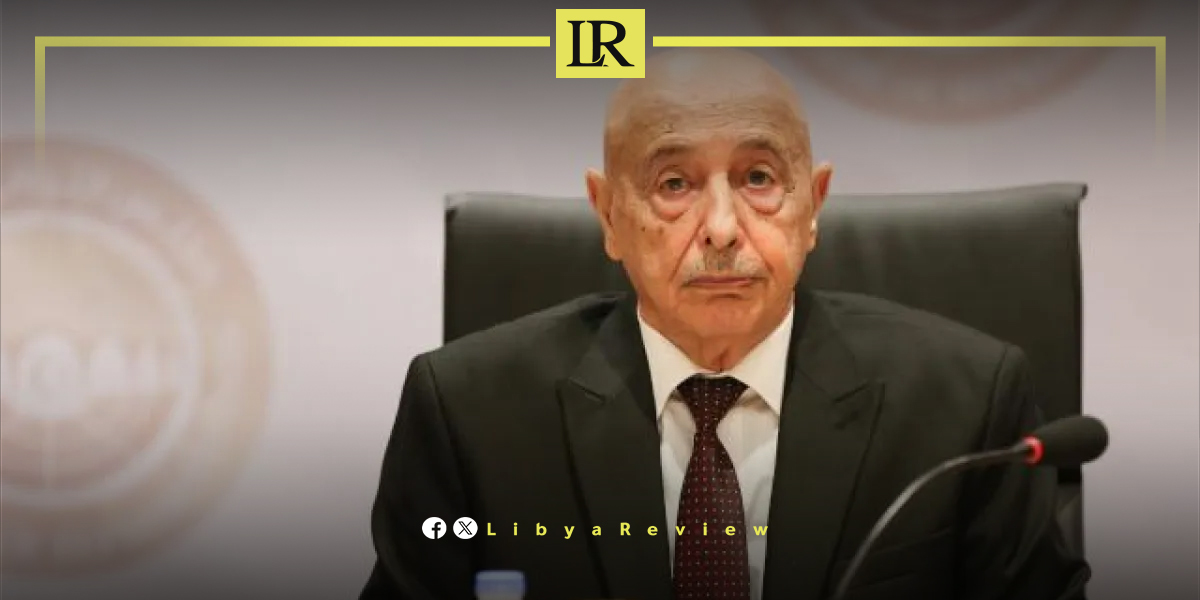
Ageela Saleh, Speaker of Libya’s House of Representatives, has welcomed the newly agreed unified state spending framework, describing it as a major step toward consolidating public expenditure, strengthening financial stability, and improving resource management.
In a statement issued on Saturday, Saleh said the agreement would support the national economy, preserve citizens’ purchasing power, and help achieve sustainable fiscal balance across the country.
The deal was officially signed earlier in the day by both the House of Representatives and the High Council of State, marking the first nationwide consensus on unified public spending in more than 13 years.
The agreement, which forms part of a broader unified development framework, includes the adoption of Libya’s general expenditure tables, covering key budget chapters related to salaries, operational costs, and development spending.
Step Toward Economic Reform and Fair Resource Distribution
Saleh described the agreement as a pivotal milestone in Libya’s economic reform path, reflecting a national commitment to prioritising the public interest through transparent financial policies and fair distribution of resources.
He said the framework would contribute to improving basic public services and advancing development and reconstruction efforts across Libya.
Boosting Confidence and National Decision-Making
The Speaker added that unified spending would help restore confidence in state institutions and reinforce Libya’s financial independence, limiting the influence of external actors on domestic economic decisions.
Saleh also praised Naji Issa, Governor of the Central Bank of Libya, along with the bank’s management and technical teams, for their role in achieving the agreement. He called for continued efforts to build on this progress and further strengthen financial stability.

