
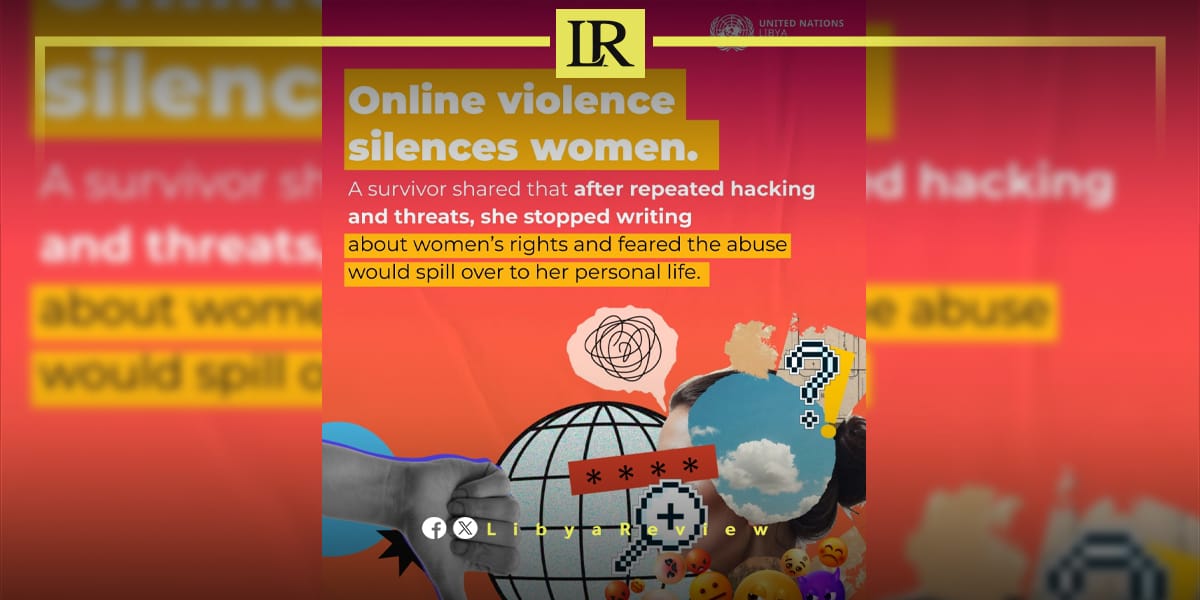
The United Nations in Libya has issued a strong call to counter the surge in digital violence targeting Libyan women, stressing that online harassment directly undermines their ability to participate in public life and national decision-making. In a statement, the UN mission said that silencing women through intimidation, smear campaigns, hacking and cyber-harassment deprives Libya of crucial voices needed for peacebuilding and democratic stability.
The UN emphasised that protecting Libyan women must extend beyond physical security and into the digital space, ensuring that social media platforms, political engagement and community dialogue remain safe environments. According to the statement, the right of women to express their views freely and without retaliation forms a core pillar in building an inclusive future for the country. The mission added that when women are forced into silence, society loses vital contributors to reconciliation efforts, nationwide social cohesion and long-term governance reform.
International organisations working in Libya have recently documented alarming patterns of online targeting, including coordinated trolling, extortion threats, exposure of personal data and campaigns aimed at discrediting prominent female figures in civil society, journalism and politics. Women activists have warned that such tactics are pushing many away from public participation entirely, fearing reprisals against them or their families.
The UN urged authorities, media institutions, community leaders and technology platforms to adopt stronger frameworks to monitor and penalise digital aggression. It also called on civil society and political parties to defend women’s voices, not only in professional or political spheres but within everyday online interactions that shape public discourse.
In its closing appeal, the mission encouraged Libyans to collectively reject digital intimidation, insisting that a peaceful and modern state cannot emerge if half of society remains threatened into silence. Ensuring a safe civic and online space for women, the statement concluded, is not optional but a national responsibility shared across institutions and communities.

