
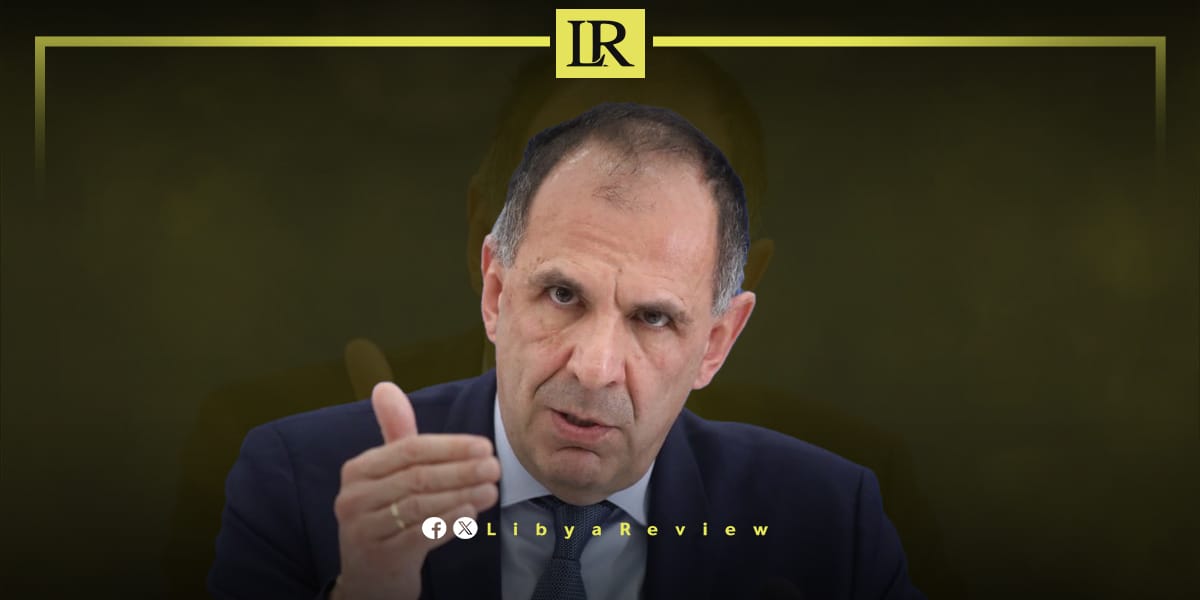
Greek Foreign Minister Giorgos Gerapetritis underlined Greece’s continued engagement with Libya as part of a broader diplomatic framework aimed at stabilising the Eastern Mediterranean, according to Tovima newspaper.
Speaking at the Vima Conference, he said structured dialogue with Libya remains essential despite ongoing disagreements, particularly over the contested Turkey-Libya maritime memorandum. He stressed that Greece maintains open channels with all Libyan actors, describing this as a strategic necessity in a region marked by friction, migration pressures and shifting security alliances.
Gerapetritis, addressing the event themed “The Eastern Mediterranean in Flux,” highlighted that Libya remains central to Greece’s Five-Party Conference initiative, which includes Cyprus, Egypt, Turkey and Libya, with the potential to expand. He said full adherence to international law and respect for sovereignty are prerequisites for participation, adding that cooperation with Libya could advance in areas such as civil protection, migration management and marine environmental security.
He noted that Greece’s position toward Libya is rooted in principled diplomacy, not tactical alignment, and that engagement with both sides of the Libyan political divide remains rare among European states. He reaffirmed that disagreements over the Turkey-Libya memorandum do not negate the need for sustained diplomatic channels, humanitarian coordination and security dialogue.
The Greek Foreign Minister also pointed to improved Greek-Turkish relations, stating that structured dialogue has reduced tensions and migration flows and increased economic exchange. He said Greece seeks stability in Libya not merely through political communication but through continued cooperation on coast guard training, maritime safety and Mediterranean connectivity.
Gerapetritis concluded by asserting that economic partnerships, energy coordination and dialogue with Libya are integral to creating what he called a “model of peace” in a region long defined by contestation and crisis.

