
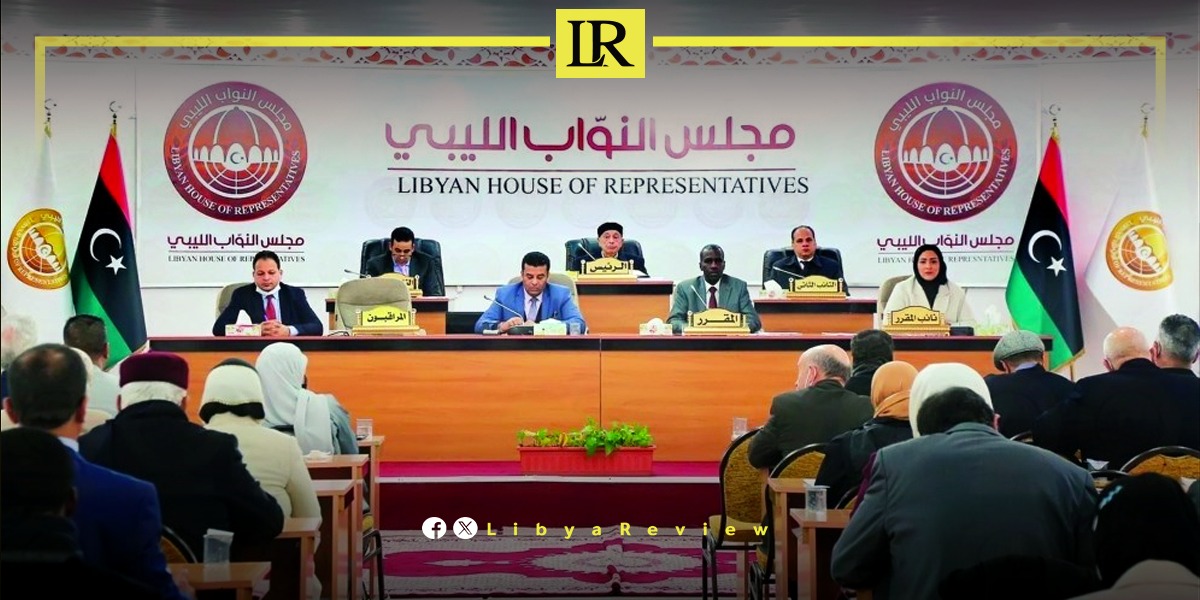
Libya’s House of Representatives resumed its official session on Tuesday, chaired by Speaker Ageela Saleh and attended by the First and Second Deputy Speakers, as lawmakers addressed a range of political, financial, and legislative issues at a critical moment for the country’s economic and institutional stability.
During the session, the House unanimously approved the budget submitted by the High National Elections Commission. Lawmakers agreed that the allocation will be implemented under the direct supervision of the parliamentary Planning, Finance, and General Budget Committee, a measure intended to ensure transparency and proper oversight.
The decision was widely viewed as a necessary step to sustain the commission’s operational capacity and keep preparations for future elections on track, despite the broader political deadlock.
The House also voted by majority to summon the Governor of the Central Bank of Libya, his deputy, and members of the bank’s board of directors to appear before parliament. The hearing will focus on the ongoing liquidity crisis, the state’s financial position, and monetary policy challenges that continue to affect daily life for citizens.
In the same context, lawmakers decided to summon representatives of the Libyan government and the National Oil Corporation to discuss public revenues, expenditure management, and coordination between fiscal and monetary authorities.
In addition to financial matters, the House approved the formation of a special committee to examine the conditions of retirees. The committee will assess pension payments, living standards, and existing challenges faced by retirees, with the aim of proposing practical solutions to improve their financial and social security.
The session also addressed proposed amendments to legislation governing higher education. Parliament decided to establish a committee tasked with reviewing changes to existing university and technical education laws, including proposals to unify and modernize the legal framework regulating higher education and scientific research.
The committee will coordinate with the Education Affairs Committee to ensure that any amendments align with national development needs and academic standards.

