
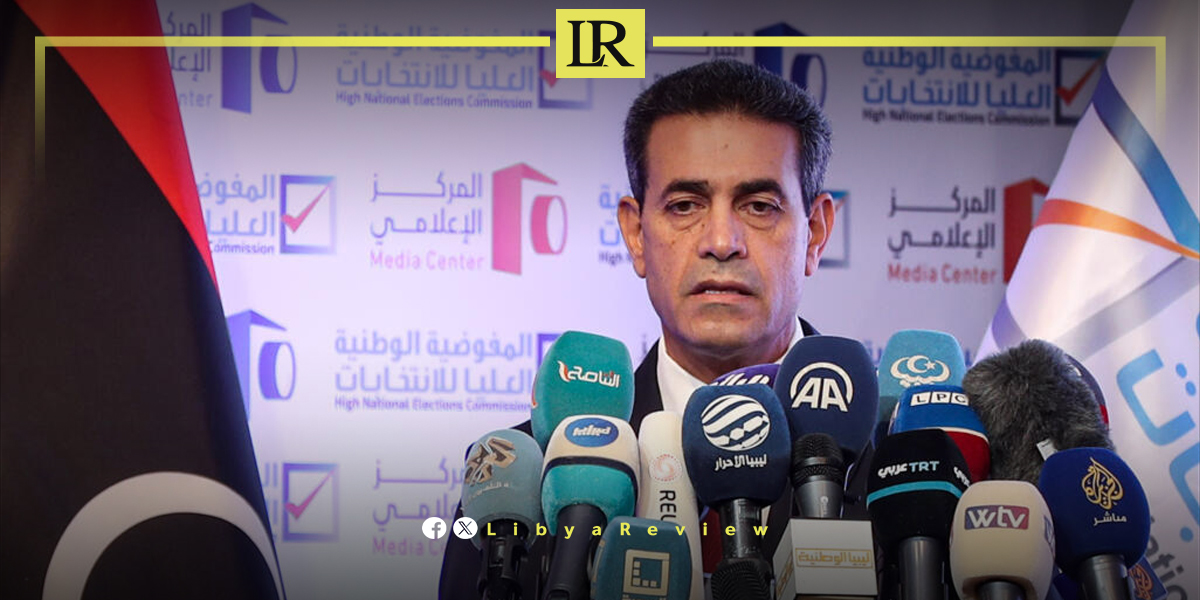
Emad Al-Sayeh, Chairman of Libya’s High National Elections Commission, has strongly criticised the approach of the UN Support Mission in Libya, accusing the mission of committing a serious mistake by rigidly adhering to its political roadmap in a way that could deepen divisions and threaten the integrity of the elections commission.
In press statements, Al-Sayeh said that filling vacancies within the commission’s board does not fall under the political agreement framework, unlike a full reconstitution of the board, which legally requires consensus between the House of Representatives and the High Council of State.
He warned that blurring this distinction risks dragging the commission into the wider political conflict.
Al-Sayeh said the UN mission’s insistence on proceeding with roadmap steps, without resolving core legal issues, could lead to a split within the elections commission—an institution many Libyans see as their last credible hope for ending years of political deadlock.
He argued that UNSMIL is repeating past mistakes, recalling earlier international efforts that pushed for forming a government without first agreeing on electoral laws.
According to Al-Sayeh, the mission is now seeking to repeat the same error by supporting changes to the commission’s leadership before securing a clear and consensual legal framework for elections.
He stressed that altering the structure of the commission without agreed electoral laws would only compound existing crises rather than resolve them.
He also accused the UN mission of adding a new institutional crisis to Libya’s already complex political landscape, alongside disputes over government formation and electoral legislation.
Al-Sayeh said this reflects a failure to fully grasp the cumulative nature of Libya’s political crises, which have persisted since 2014.
Al-Sayeh further pointed to what he described as contradictory messages from the UN mission, noting that it alternates between calls to reconstitute the commission and proposals to merely fill vacant seats, suggesting confusion over the legal difference between the two approaches.
He added that Stephanie Khoury had endorsed the idea of reconstituting the commission and aligned with political bodies on sovereign positions, a move he said contradicted earlier UN statements and revealed internal inconsistency within the mission itself.

