
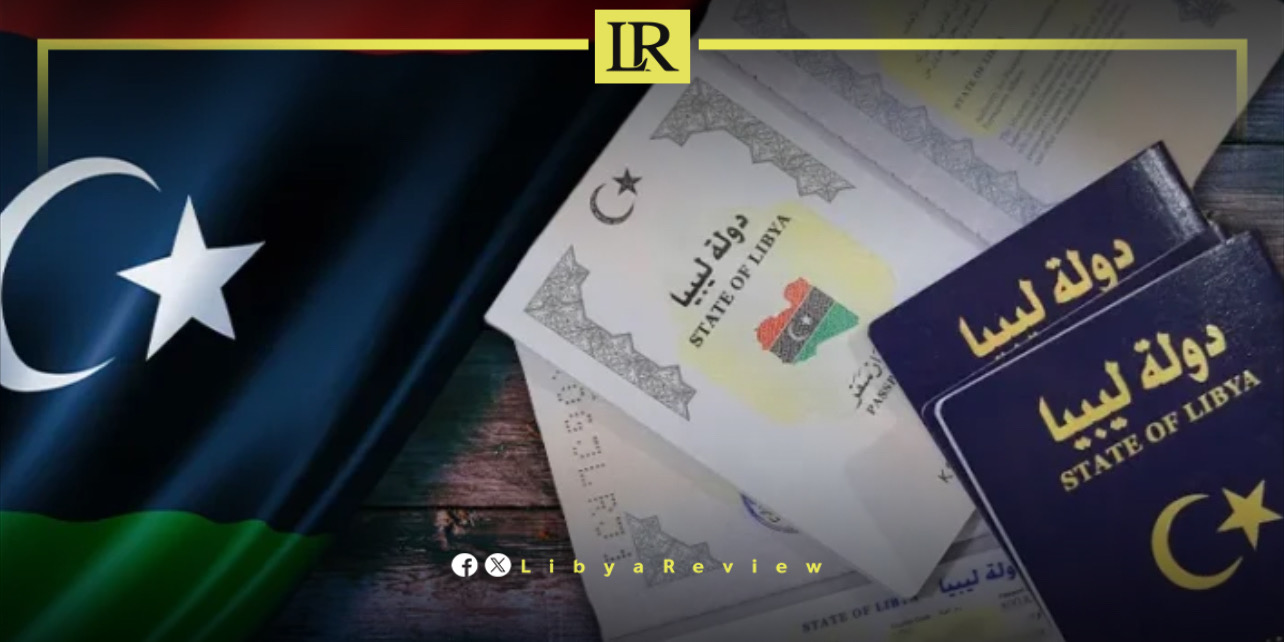
Libya’s passport has recorded a noticeable improvement in its global standing at the start of 2026, according to the latest ranking issued by the Henley Passport Index, marking the country’s best performance in more than a decade.
Under the 2026 index, the Libyan passport climbed to 93rd place worldwide, up from 100th in 2025. This advancement removes Libya from the list of the world’s ten weakest passports and represents a symbolic shift after years of declining mobility caused by prolonged political instability and security turmoil.
The improvement is the strongest result for Libya since 2014, a year that marked the beginning of deep political divisions and conflict that significantly weakened the country’s international ties and restricted the movement of its citizens. For much of the past decade, Libyan passport holders have faced limited access to global destinations as a direct consequence of diplomatic isolation and internal instability.
According to the index, Libyan citizens can now travel to 39 destinations worldwide without obtaining a visa in advance. This figure includes countries that allow visa-free entry as well as those that grant visas on arrival. While the number remains modest compared to neighboring countries and politically stable states, analysts view it as a gradual sign of improved international openness.
Observers note that passport strength is closely linked to diplomatic relations, political stability, and international cooperation. Any improvement in mobility often reflects incremental gains in these areas, even if broader challenges remain unresolved.
The Henley Passport Index is widely regarded as the most authoritative global benchmark for passport rankings. It evaluates passports based on the number of destinations holders can access without a prior visa. The index relies on exclusive data from the International Air Transport Association, which maintains the world’s largest travel information database, alongside research conducted by Henley & Partners, a London-based global advisory firm.
Despite the positive movement, experts caution that sustained progress will depend on continued political stabilization, institutional reform, and the strengthening of Libya’s foreign relations. While the latest ranking offers cautious optimism, further improvements remain closely tied to the country’s broader political and economic trajectory.

