
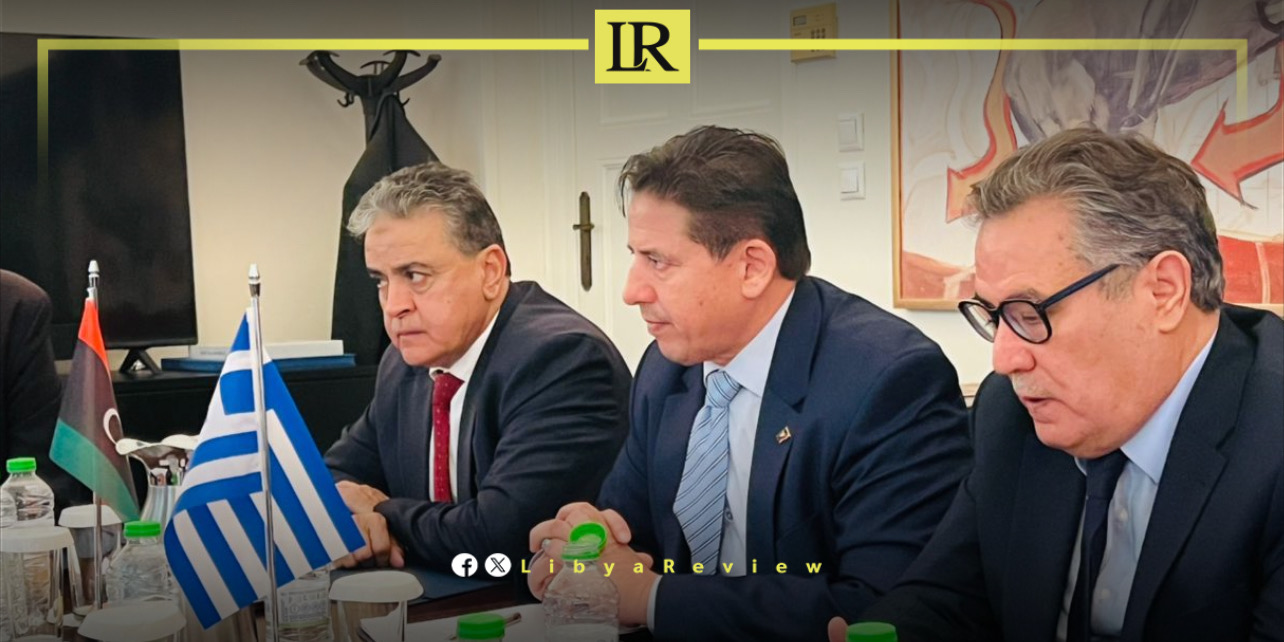
The Libyan House of Representatives Committee for the Verification and Follow-up of Frozen Libyan Assets Abroad, headed by Youssef Al-Agouri, held talks with Greek Deputy Foreign Minister Alexandria Papadopoulou on strengthening bilateral cooperation and advancing coordination on the issue of Libyan funds frozen overseas.
During the meeting, the committee highlighted the depth of historical and cultural ties between Libya and Greece, stressing that this shared heritage provides a solid foundation for enhancing political and institutional partnership, particularly at a time of growing regional and international challenges. The Libyan side underlined the importance of sustained dialogue and coordinated action between the two countries.
The discussions focused on the status of Libyan sovereign assets frozen abroad under international decisions. The committee reaffirmed that these funds belong to the Libyan people and were frozen to protect them, not to confiscate them. It recalled that in October 2025 the committee submitted a memorandum to the UN Security Council calling for the appointment of an independent international audit firm to review and verify all frozen Libyan assets, in line with transparency principles and to safeguard these funds from mismanagement or misuse.
Al-Agouri stressed that ensuring full oversight of the frozen assets and clarifying their current status within international banking institutions is a sovereign right for Libya, and a necessary step toward preserving national wealth and preparing for its future recovery and utilization in reconstruction and development.
For her part, the Greek Deputy Foreign Minister expressed Athens’ readiness to support Libyan initiatives related to the frozen assets file. She affirmed Greece’s support for Libya’s right to track and review its sovereign funds and urged all relevant states and financial institutions to comply with UN Security Council Resolution 2769 of 2025, which governs the handling and protection of Libyan frozen assets.
The meeting reflects growing diplomatic engagement between Libya and Greece on financial, legal, and institutional cooperation, particularly on sensitive issues linked to sovereign wealth, international oversight, and the protection of national resources.

