
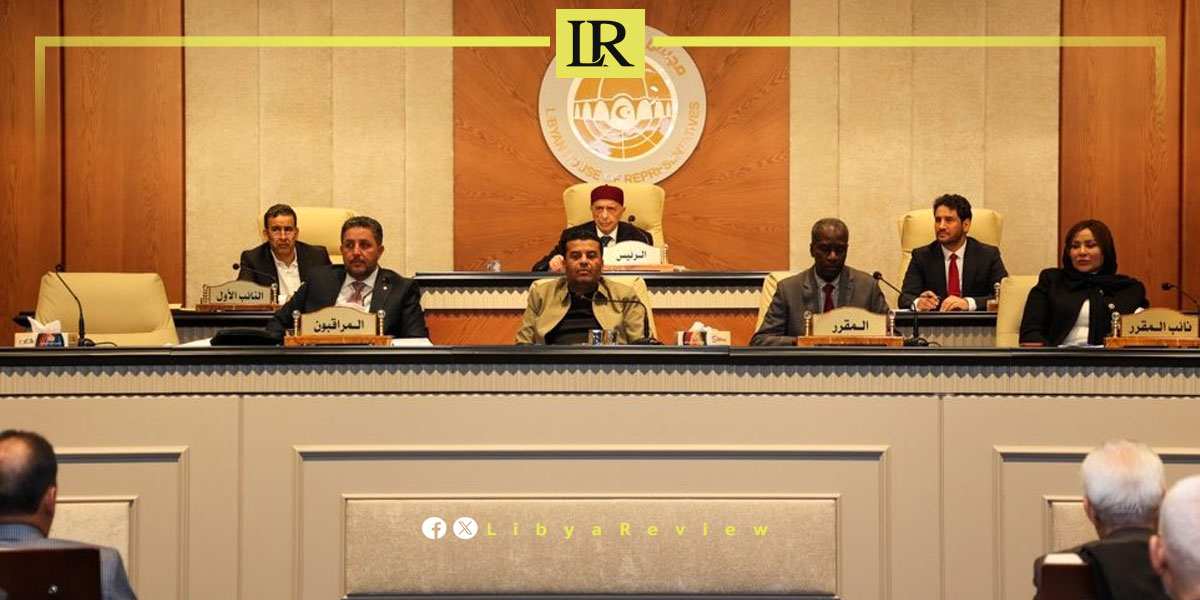
The Libyan Parliament has formally rejected an agreement signed by outgoing Prime Minister Abdulhamid Dbaiba with Qatar and Italy to develop and expand the port facilities of the Misrata Free Zone, accusing his government of exceeding its authority and compromising Libya’s sovereignty and national resources.
The agreement, which focuses on upgrading and expanding the port infrastructure in Misrata, has triggered widespread political and legal controversy.
In a statement, the Energy Committee and the Foreign Affairs Committee of the House of Representatives voiced its categorical rejection of the deal, describing it as an unlawful concession involving sovereign assets and a dangerous precedent at a time of political division.
Lawmakers stressed that the Government of National Unity, whose mandate has expired, lacks any constitutional or legal authorization to conclude long-term strategic agreements, particularly in vital sectors such as ports and free zones that are closely linked to national security and economic independence.
They warned that such agreements could impose binding obligations on future elected governments and expose the country to prolonged legal and political disputes.
Political analysts say the controversy reflects a deeper legitimacy crisis rather than a purely economic disagreement. Analyst Khaled Mohamed Al-Hijazi noted that the deal highlights unresolved questions about authority, sovereignty, and decision-making in Libya. He said many Libyans view the agreement as an attempt to impose a political and economic fait accompli by tying a critical national facility to arrangements concluded by an interim government.
Al-Hijazi added that the Misrata Port is not merely a commercial gateway but also carries political and strategic weight, given Misrata’s status as a major power center and a key base of support for Dbaiba. Critics argue that the agreement risks reinforcing political influence for one camp while deepening regional imbalances and national divisions.

