
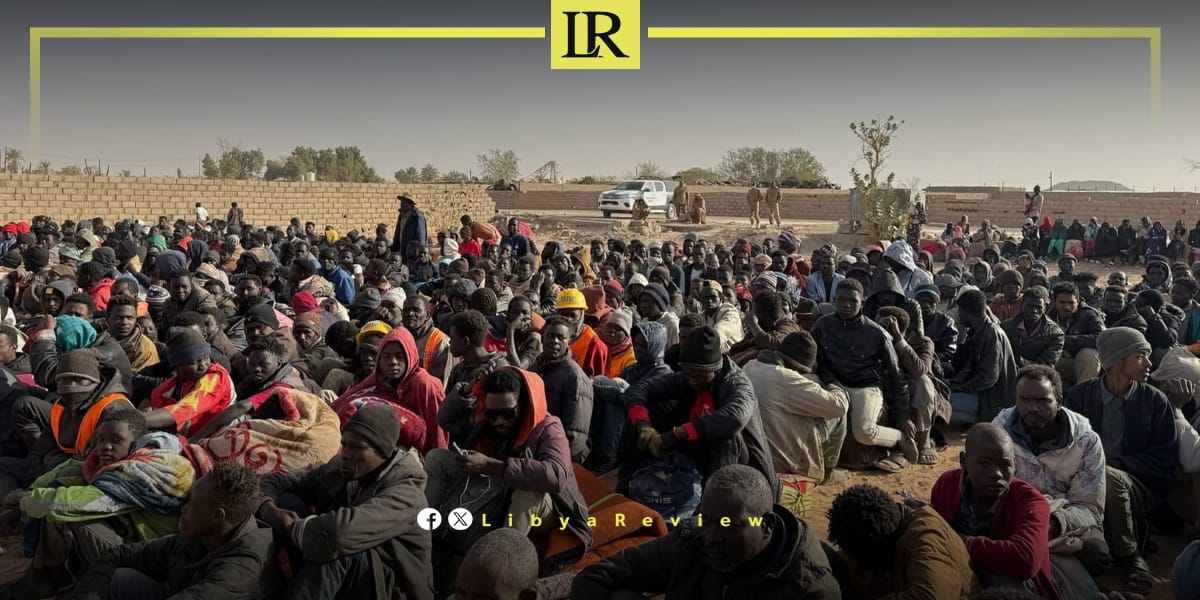
More than 2,000 illegal migrants were arrested in a single day during a large-scale security operation carried out in the southern Libyan city of Sebha, marking a significant escalation in efforts to combat illegal migration and human smuggling networks.
The operation followed recent coordination meetings that brought together the Director of Sebha Security Directorate, the Director of the Security Operations Department, and the Head of the Illegal Migration Control Agency. The outcomes of those meetings have now translated into concrete action on the ground.
In the early hours of the morning, an emergency meeting was held involving senior security officials to finalise operational plans and deploy joint forces. The meeting included Major General Abdulrahman Al-Ansari, Director of the Illegal Migration Control Agency branch in the southern region, Brigadier Ahmed Hassouna, Commander of the Security Operations Patrols, and Captain Ahmed Al-Saeeti, Head of the General Investigations Department and Patrols Commander at the Sebha Security Directorate.
The meeting resulted in the formation of a joint security force comprising personnel from the Sebha Security Directorate, the Security Operations Department, and the Illegal Migration Control Agency. Shortly after its formation, the force launched a series of coordinated and surprise raids targeting locations used by illegal migrants inside the city.
According to a statement by Sebha Directorate, the first hours of the operation led to the arrest of more than 2,000 illegal migrants of various nationalities. Several sites used as gathering points and shelters were dismantled, while security control was significantly reinforced across key areas of Sebha.
Officials said the operation sent a firm message to human trafficking and smuggling networks operating in the region, confirming that security authorities would not tolerate activities that threaten public order and stability.
The campaign forms part of a broader security plan aimed at restoring control over public spaces, securing southern Libya, and reducing the negative social and security impacts caused by illegal migration flows through unofficial routes.

