
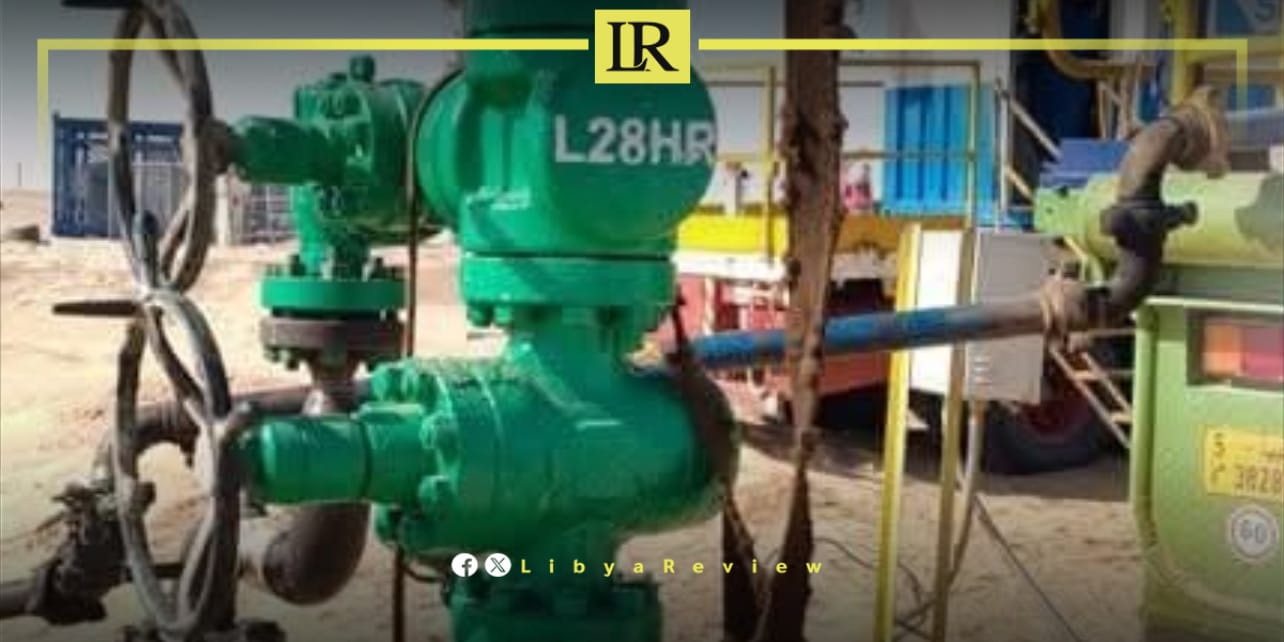
Libya has recorded a new boost to its oil output after the completion of development works on the L-028HR well at the Sarir oil field, one of the country’s largest producing assets in the east.
The Arabian Gulf Oil Company (AGOCO) confirmed on Tuesday that the well had been returned to production following the completion of a comprehensive technical development programme. The well is now producing around 2,200 barrels of crude oil per day, in addition to approximately 350,000 standard cubic feet of natural gas.
According to the company, the upgrade programme included mechanical and electrical tie-in works at the Sarir field, carried out by specialised maintenance teams. These operations were completed in line with high technical standards to ensure the well’s readiness for sustainable production.
The programme also involved maintenance of the wellhead and the replacement of damaged valves. These works were implemented by production follow-up engineering teams operating at the field, contributing to the safe and efficient restart of the well.
The L-028HR well has a long history, dating back to August 1982. Despite being drilled more than four decades ago, it did not initially enter the production cycle and was instead used as an observation well to monitor reservoir pressure. A recent technical reassessment led to a decision to develop the well and integrate it into the production system.
The move forms part of the National Oil Corporation’s broader strategy to increase Libya’s oil production by rehabilitating existing infrastructure and maximising output from mature fields. Libya has increasingly focused on restoring idle or underperforming wells as a cost-effective way to support production growth.
The Chairman and members of the National Oil Corporation’s board praised the efforts of AGOCO and its workforce across various oil sites. They highlighted the importance of such achievements in strengthening national production levels and supporting the Libyan economy.
Officials reaffirmed continued support for national technical staff, stressing that developing local expertise remains central to Libya’s long-term energy strategy.

