
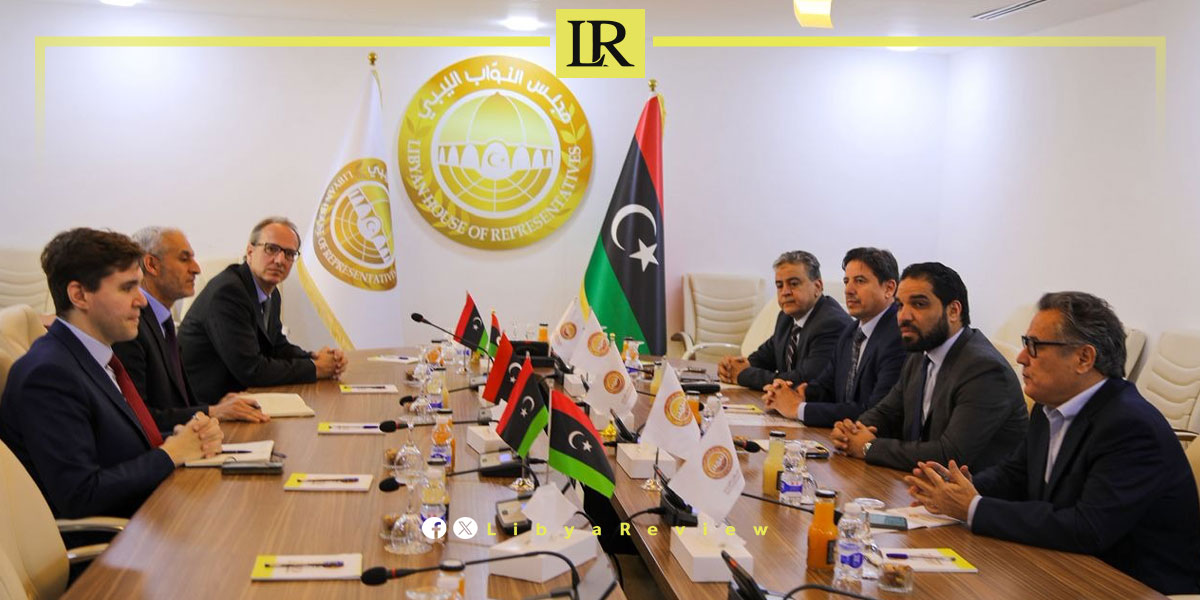
Libya’s joint task force responsible for monitoring frozen Libyan assets abroad has stepped up its diplomatic engagement by holding high-level talks with British Ambassador to Libya Martin Longden, focusing on strengthening international support for the protection and future recovery of Libya’s frozen sovereign funds.
The meeting was held at the House of Representatives’ headquarters in Tripoli and included senior officials directly involved in the frozen-assets file.
Among them was Youssef Al‑Agouri, head of the parliamentary committee tasked with following up on Libyan assets frozen overseas, alongside members of the verification committee, representatives of the Ministry of Foreign Affairs, and officials from Libya’s oversight bodies.
During the discussions, Libyan representatives stressed that the frozen assets constitute sovereign wealth belonging exclusively to the Libyan people and must be preserved intact until conditions allow for their lawful recovery and use.
Al-Agouri emphasized that safeguarding these funds is a national priority, warning that prolonged freezes without robust monitoring could expose Libya’s wealth to legal risks, depreciation, or indirect misuse.
Libyan officials highlighted the strategic importance of the United Kingdom’s role, particularly as a key actor within the UN Security Council and a central stakeholder in decisions related to Libya’s frozen assets.
They called for continued British support to ensure strict compliance with international protections while also backing mechanisms that enhance transparency, oversight, and coordination with legitimate Libyan institutions.
Ambassador Reynolds expressed understanding of Libya’s position and acknowledged that the frozen funds represent sovereign assets that must be protected for the benefit of current and future generations.
He affirmed the United Kingdom’s commitment to preserving these assets in accordance with international law and stressed the importance of ongoing dialogue with Libyan authorities to address concerns related to asset protection and long-term financial stability.
Both sides agreed on the need for sustained cooperation, continued consultations, and closer coordination to ensure that Libya’s frozen funds remain secure until they can be responsibly restored to serve national recovery and development.

