
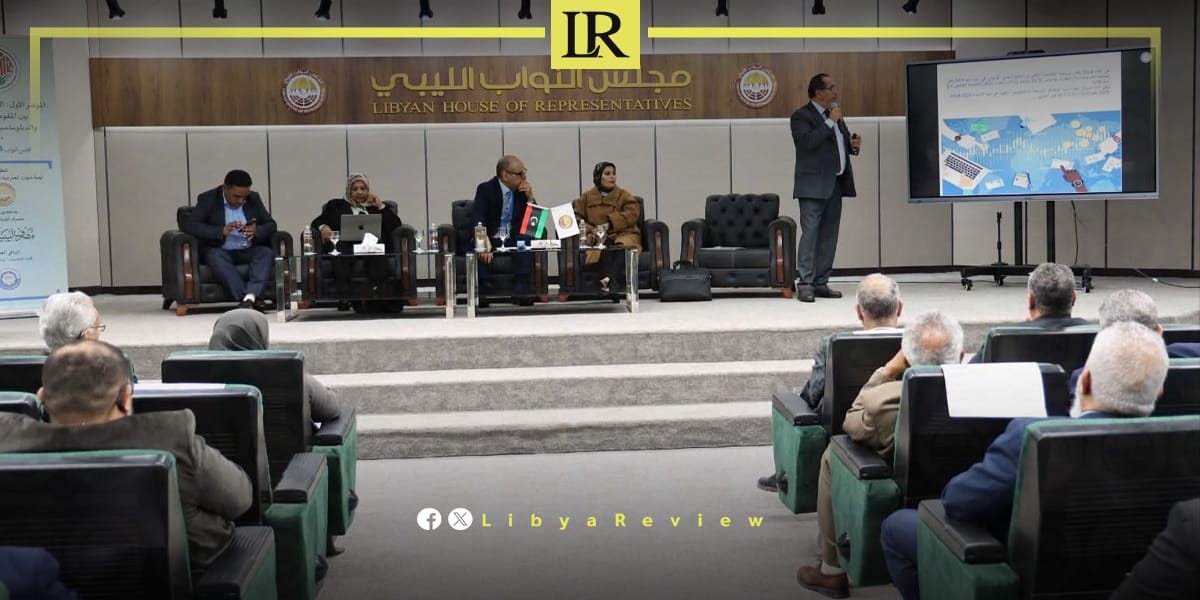
An economic conference organised by the Foreign Affairs Committee of Libya’s House of Representatives has concluded in Benghazi, focusing on economic diversification as a pathway towards stability and reform, according to a statement by the official parliamentary spokesperson Abdullah Blihaq.
The conference, held at the headquarters of the House of Representatives in Benghazi, was titled Economic Diversification Between Local Potential and Economic Diplomacy. It was attended by Member of Parliament Al-Salihin Abdul Nabi, alongside a wide range of economists, policy experts and representatives from the private sector.
Over two days, participants reviewed several economic papers prepared specifically to brief decision-makers on key opportunities and challenges facing Libya’s economy. Discussions covered sectors such as mining, the green economy, the blue economy and other emerging fields with the potential to reduce dependence on hydrocarbons.
Speakers at the closing session unanimously warned of the seriousness of Libya’s current economic situation. They stressed that economic reform must be addressed separately from political divisions, arguing that the economy could serve as a driver for stability and a tool for reuniting divided executive authorities.
Despite the challenges, participants pointed to positive indicators that could allow for meaningful economic reforms under current conditions. They called for urgent measures to tackle structural weaknesses, including reducing reliance on oil as the sole source of national income and reassessing how oil revenues are utilised to achieve sustainable economic returns.
The conference also highlighted the need to stimulate non-oil sectors, a process that would require institutional and legislative reforms in the short and medium term. Strengthening public-private partnerships was identified as a key mechanism for driving growth and creating jobs.
Participants agreed on the importance of adopting practical approaches to managing the economic file in a way that helps overcome governmental fragmentation. Mechanisms were also proposed to ensure the effective follow-up and implementation of the conference’s recommendations.
At the conclusion of the event, conference chair Yousef Al-Agouri pledged to pursue the recommendations at a national level, calling for unified efforts to deliver practical solutions that ease the economic crisis and improve living conditions for Libyans across the country.

