
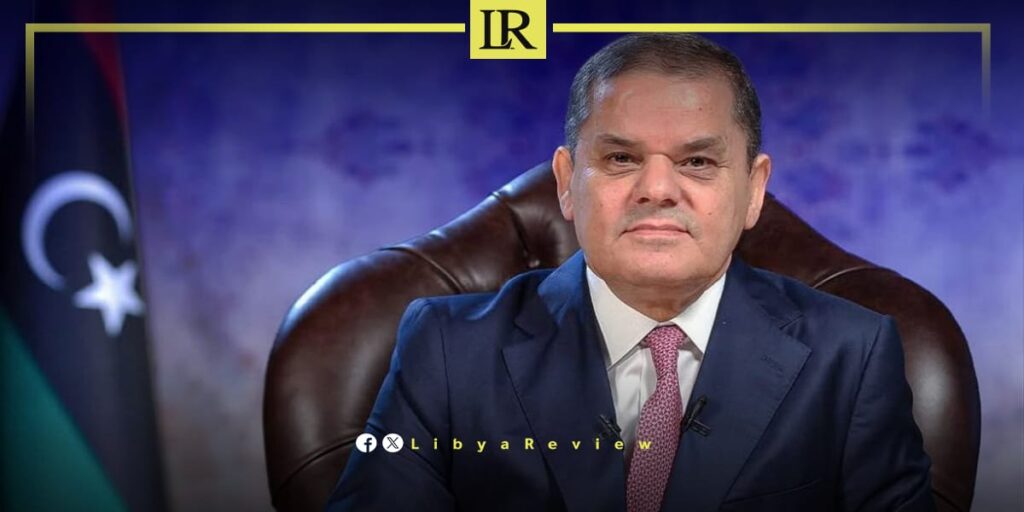
The Municipal Council of Benghazi has issued a strongly worded statement condemning remarks made by Abdel-Hamid Dbaiba, head of the Government of National Unity (GNU), during his address marking the 15th anniversary of the 17 February revolution.
In its statement, the council said Dbaiba’s speech contained “misrepresentations and inaccurate information” that do not reflect the reality of Libya’s current conditions. It questioned the scale of public spending over the past five years, estimated at more than 500 billion Libyan dinars, arguing that such figures raise “legitimate questions” about how funds were allocated and what tangible results were achieved.
The council criticised what it described as the absence of visible projects directly improving citizens’ lives, pointing to allegations of financial mismanagement and the exploitation of public funds for “narrow interests”. It further highlighted concerns over financial indicators and credits granted by the Central Bank of Libya in 2025, which reportedly exceeded 26 billion US dollars.
According to the statement, these figures require the highest levels of transparency and oversight, particularly amid claims of “unlawful practices” that have negatively affected the national economy and contributed to the depreciation of the Libyan dinar against foreign currencies.
The council also stressed that development projects implemented in eastern and southern Libya represent legitimate rights of citizens who had long been deprived of services and infrastructure. It argued that improvements in certain economic growth indicators during 2025 are directly linked to projects carried out in those regions.
Responding to the criticism, Dbaiba had said on Tuesday that “parallel spending” over the past three years exceeded 300 billion dinars, a figure approved by the House of Representatives as public debt. He added that exchange rate adjustments were adopted to address this debt and stated that he had formally requested the Central Bank governor to halt development spending if other parties failed to meet agreed commitments, in order to avoid harm to citizens’ livelihoods.

