
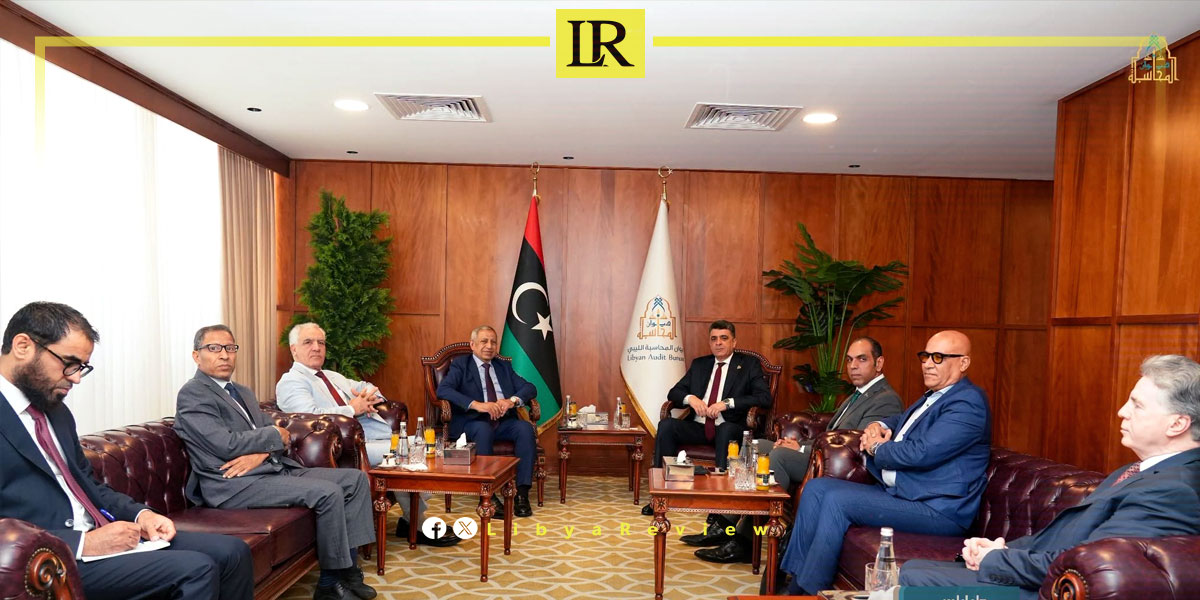
The Libyan Audit Bureau has discussed expanding cooperation with the Arab Academy for Science, Technology and Maritime Transport in training, institutional development and capacity building, as part of efforts to improve audit performance and strengthen professional skills.
The talks were held at the bureau’s headquarters in Tripoli between the President of the Libyan Audit Bureau, Khaled Shakshak, and the President of the Arab Academy for Science, Technology and Maritime Transport, Ismail Abdel Ghafar, with several specialised departments also attending the meeting.
During the meeting, the Arab Academy reviewed training programmes it has carried out and supervised in financial control, auditing and internal audit. The discussions also covered programmes related to integrity and leadership, which aim to improve institutional performance and develop technical and professional capabilities.
The two sides also discussed future cooperation between the institutions. They agreed to continue coordination and work on preparing a general framework for a joint memorandum of understanding. The proposed framework is expected to support the Libyan Audit Bureau’s strategy for institutional development and capacity building.
The meeting underlined the importance of cooperation in digital transformation, audit and review work, legal qualification, studies and consultancy services. It also addressed the need to strengthen integrity principles and apply international standards followed by supreme audit institutions, including the standards of the International Organization of Supreme Audit Institutions, known as INTOSAI.
The planned cooperation is expected to help develop oversight work, improve institutional performance and support the Libyan Audit Bureau’s efforts to build stronger professional capacities within the public audit sector.
The Libyan Audit Bureau plays a central role in financial oversight and accountability in Libya. Its cooperation with regional academic and training institutions comes as public bodies seek to modernise administrative systems, improve governance standards and raise the quality of public financial control.

