
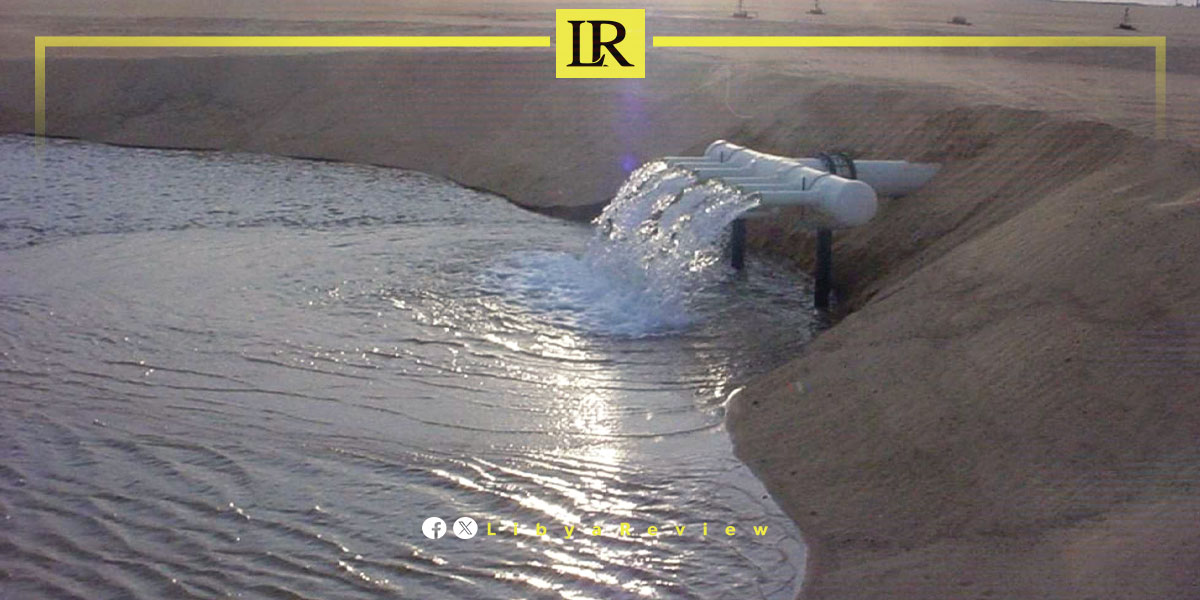
Western Libya is facing growing concerns over water shortages after officials warned that illegal connections along the Hasawna-Jefara water system are worsening supply deficits and threatening water deliveries to Tripoli and other cities in the region.
The warning comes as the Great Man-Made River Authority announced plans to launch a security campaign aimed at removing illegal connections and protecting the country’s strategic water infrastructure.
Known in Libya as the country’s “lifeline”, the Great Man-Made River Project has for decades served as the principal source of drinking water for most Libyan cities. The vast engineering project transports groundwater from desert aquifers in southern Libya to densely populated coastal areas in the north through hundreds of kilometres of pipelines.
The concerns intensified following an inspection tour conducted by Ahmed Al-Deeb, Chairman of the Administrative Committee of the Great Man-Made River Authority in western Libya.
The tour covered the central route of the system, including Tarhuna, Bani Walid, the Shwerif control station and the Hasawna wellfields, to assess the extent of encroachments on water transmission lines.
Officials said the Hasawna-Jefara system, which constitutes the second phase of the project, was originally designed to transport approximately 2.5 million cubic metres of water per day from the Hasawna wellfields to Tripoli and other coastal cities.
According to the authority, the inspection revealed widespread illegal pipelines being used to irrigate unregulated farms through flood irrigation methods, contributing to significant losses in water supplies destined for Tripoli and municipalities across western Libya.
The authority blamed the illegal diversions for creating a serious water deficit and warned that continued unauthorised extraction could eventually force a complete suspension of water supplies to the capital and surrounding areas.
In response, officials announced the immediate launch of a security operation, in coordination with relevant agencies, to dismantle illegal connections and protect what they described as Libya’s water security.
The authority stressed that the country’s water infrastructure remains a national red line that cannot be compromised.

