
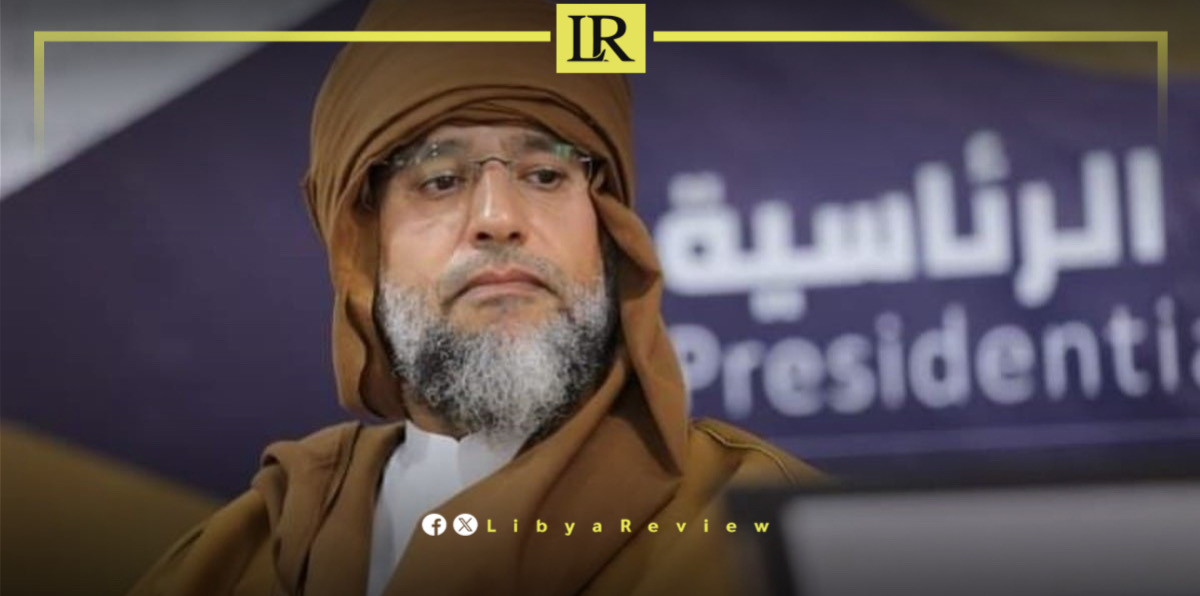
The reconciliation team representing Libyan presidential hopeful Saif al-Islam Gaddafi has issued a strong warning over rising military tensions across Libya, accusing armed factions of deliberately undermining peace efforts for personal and political gain.
Ali Bousbeha, head of Saif’s national reconciliation team, said that recent military mobilizations in parts of the country signal a dangerous attempt to reignite conflict.
He expressed “deep concern” over the renewed escalation, warning it could drag Libya back into violence and prolong the suffering of its people.
In comments reported by Asharq Al-Awsat, Bousbeha blamed the current surge in tensions on actors opposed to the national reconciliation process, particularly those who refused to sign the Addis Ababa Reconciliation Charter, which was supported by various Libyan factions earlier this year.
“These same groups are now contributing directly to the instability we’re seeing today,” he said. “They are actively working to derail any peaceful resolution in favor of continued chaos, from which they benefit.”
Bousbeha stressed that Libya’s crisis cannot be resolved by force or through exclusive arrangements. “A lasting solution requires a comprehensive national dialogue that brings together all segments of the Libyan society without marginalization or exclusion.”
He warned of clear intent by certain factions to sustain a climate of insecurity and division, arguing that continued instability serves the narrow interests of those who reject reconciliation, fear accountability, or rely on conflict for influence.
The statement comes amid growing fears of renewed clashes in western and southern Libya, where military convoys and shifting alliances are raising alarm among observers.
Saif al-Islam’s team called on all parties — domestic and international — to reject escalation, support national unity, and work toward an inclusive peace framework that respects the rights and voices of all Libyans.

