
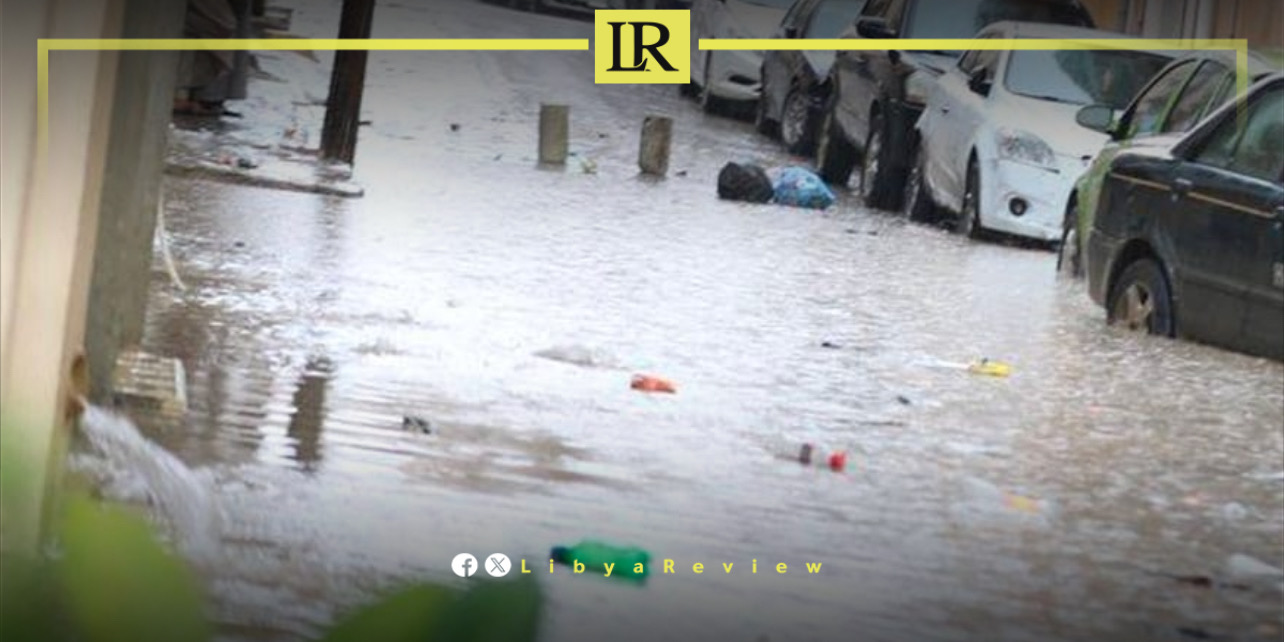
Benghazi and several cities along Libya’s eastern coast were hit by heavy rainfall late Friday, triggering widespread flooding and renewed warnings from weather authorities as the storm system intensifies.
The downpour caused significant water accumulation in major streets and residential neighborhoods, disrupting traffic and leaving parts of the city difficult to access.
Videos shared across social media captured scenes of submerged roads, stalled vehicles, and residents struggling to navigate rising water levels. In the eastern outskirts of the city, floodwaters surged through Wadi Al-Naghar, creating hazardous conditions and forcing many citizens to remain indoors.
The scale of flooding quickly overwhelmed drainage systems, highlighting once again the vulnerability of Libyan cities to seasonal weather fluctuations.
The National Safety Authority in Tokra confirmed that several homes in nearby areas were flooded after persistent rainfall overnight.
Rescue teams were immediately dispatched, accompanied by the Municipal Guard and Social Affairs officials, to assist affected families and provide temporary support. The authority reassured the public that no casualties had been recorded.
In Benghazi, Anwar Al-Obaidi, acting director of branch operations at the Ambulance and Emergency Service, said the situation remains manageable.
He noted that coordinated rescue efforts with the Red Crescent and Benghazi Security Directorate resulted in the safe evacuation of six families trapped in a flooded house in the Al-Kish district.
The Ministry of Water Resources in the government of Prime Minister Osama Hamad issued a weather alert forecasting moderate to heavy rainfall from Sirte to Musaid, warning that unstable conditions may persist through Tuesday.
The ministry urged residents to avoid valleys, reduce driving speeds, and stay clear of waterlogged areas.
The National Meteorological Center reinforced these warnings, predicting continued rainfall over the next 48 hours across eastern Libya. Officials stressed that residents in low-lying zones should act with caution due to the risk of sudden flooding.

