
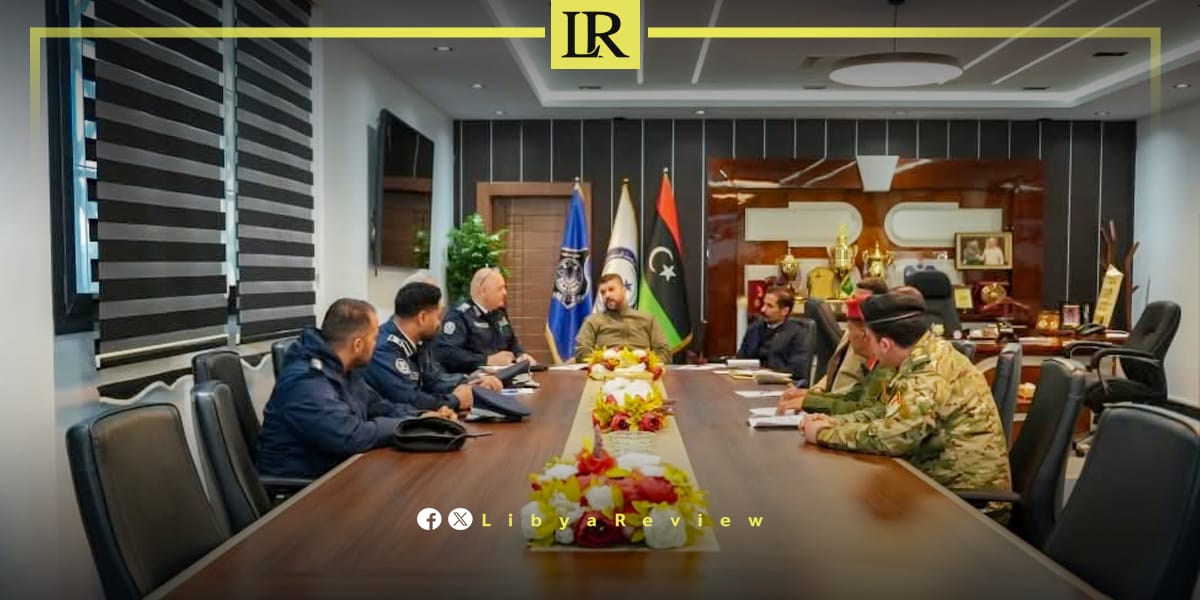
Libya’s Interior Ministry, aligned with the parliament-appointed government in Benghazi, announced the formation of a high-level committee tasked with resolving the ongoing fuel crisis, which has caused significant pressure on daily life across eastern regions.
According to the official statement, the committee will be chaired by Deputy Interior Minister, General Faraj Egaim, and was established under direct instructions from Deputy Commander-in-Chief of the Libyan National Army, Lieutenant General Saddam Haftar. The mandate involves conducting urgent assessments and recommending immediate corrective measures to stabilise fuel supplies, curb disruptions, and prevent the recurrence of shortages.
The formation of the committee also comes following the direction of National Security Adviser Lieutenant General Abdelrazek Al-Nadhouri. The committee convened its first session in Benghazi, bringing together all key security and intelligence components, including representatives from the General Intelligence Service, Military Intelligence Department, Internal Security Agency, National Security Council, and the Joint Security Forces Command.
The meeting focused on outlining security coordination mechanisms to prevent smuggling, regulate distribution, and address structural weaknesses in fuel transport and storage networks. The committee also discussed the potential integration of monitoring technology and tighter checkpoints along internal routes known to be exploited by smuggling networks.
Officials stressed that the fuel shortage has had a direct impact on essential services, mobility, and commercial supply chains. The Interior Ministry emphasised that the committee will act with urgency to avoid crowding at fuel stations and restore regular supply cycles.
The statement further underscored that comprehensive security coordination, rather than temporary measures, will be central to the response. The committee will deliver its findings and proposals directly to the National Security Council, with the goal of securing sustainable fuel availability.

