
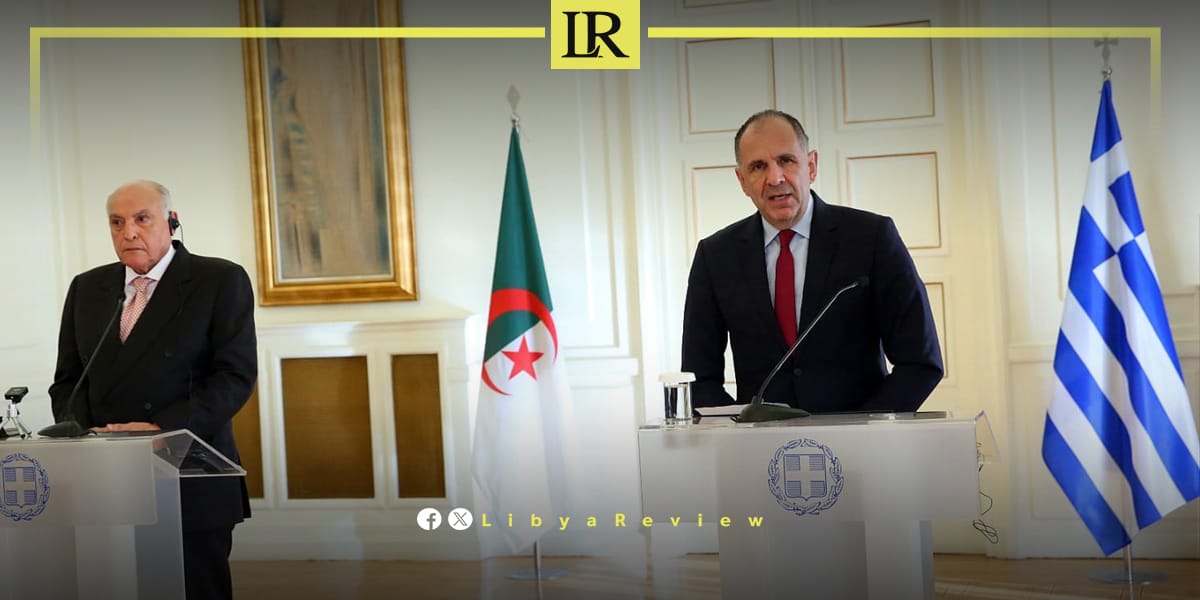
Greece reaffirmed its support for Libya’s sovereignty and the need to hold free and fair elections during high-level talks in Athens between Greek Foreign Minister George Gerapetritis and his Algerian counterpart Ahmed Attaf.
Although the meeting covered a wide range of Mediterranean and regional files, the Libyan issue emerged as a key point of discussion, with both sides expressing concern over the prolonged political deadlock and the risks posed by foreign interference.
Gerapetritis said Greece “fully respects Libya’s sovereignty” and supports a political process that leads to a representative and unified government. He stressed that elections must be conducted without external influence and in accordance with international law, adding that stability in Libya is vital for wider Mediterranean security.
The two ministers exchanged views on regional dynamics, including the situation in Gaza, the Sahel, and broader Mediterranean cooperation, but highlighted Libya as a shared priority for Athens and Algiers. Both nations are elected members of the UN Security Council, where they coordinate positions on North African and Mediterranean issues.
Greek officials underlined that the Mediterranean remains central to European energy diversification and migration management, noting that developments in Libya directly affect maritime security, regional trade and EU strategic planning. The meeting also reaffirmed Greece’s long-standing position that resolving the Libyan crisis requires a legitimate government empowered through elections, dialogue among Libyan parties and strong support from neighbouring states.
Gerapetritis said Greece would continue engaging with regional partners, including Algeria, to promote stability in Libya and encourage diplomatic efforts led by the United Nations. He added that maintaining constructive ties with North African countries is a strategic priority for Athens as the EU updates its Mediterranean policy framework.
The talks are expected to feed into further bilateral consultations, with Greece positioning itself as a vocal supporter of a Libyan-led political roadmap that restores institutions and ends years of fragmentation.

