
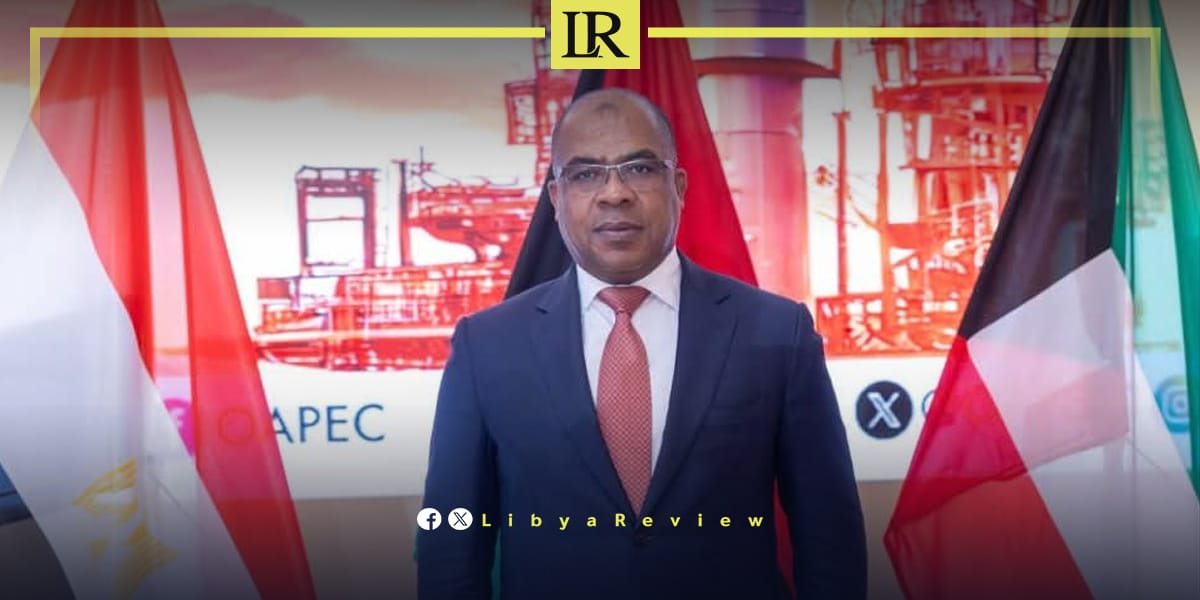
Libya will assume the rotating presidency of the Council of Ministers of the Organisation of Arab Petroleum Exporting Countries (OAPEC), along with the organisation’s Executive Bureau, starting on January 1, 2026, in a move reflecting renewed regional confidence in Libya’s role within the Arab energy sector.
The announcement was made during the 115th meeting of the OAPEC Council of Ministers, held in Kuwait, with the participation of oil and energy ministers from member states. Libya was represented by the Minister of Oil and Gas of the interim Government of National Unity, Khalifa Abdul Sadiq.
According to a statement published by the government’s official platform, the Council congratulated Libya on taking over the next presidency, describing the decision as an expression of trust in Libya’s contribution to joint Arab energy action and its engagement within the organisation’s institutional framework.
The meeting also approved the appointment of Khaled Al-Otaibi as Secretary-General of OAPEC for a three-year term starting in March 2026, succeeding Jamal bin Issa Al-Loughani. Ministers praised Al-Loughani’s professional record and leadership during a sensitive period, while voicing confidence in Al-Otaibi’s ability to manage the organisation’s transitional phase and strengthen coordination among member states.
Discussions during the session focused on ongoing efforts to reform and modernise OAPEC, including plans to relaunch the organisation under a new name, the Arab Energy Organisation. The rebranding aims to enhance its regional role and align its mandate with global shifts in the energy sector, including energy transition challenges and emerging technologies.
The Council also announced the winners of the 2024 OAPEC Award for Scientific Research, dedicated this year to studies in new and renewable energy, highlighting the organisation’s intention to broaden its focus beyond traditional hydrocarbons.
Libya’s upcoming presidency comes as the country seeks to reinforce its standing in regional energy diplomacy, despite ongoing domestic political and economic challenges, and to play a more active role in shaping Arab cooperation on oil, gas, and energy policy.

